



BI Reassures Markets Following Moody’s Negative Outlook Shift
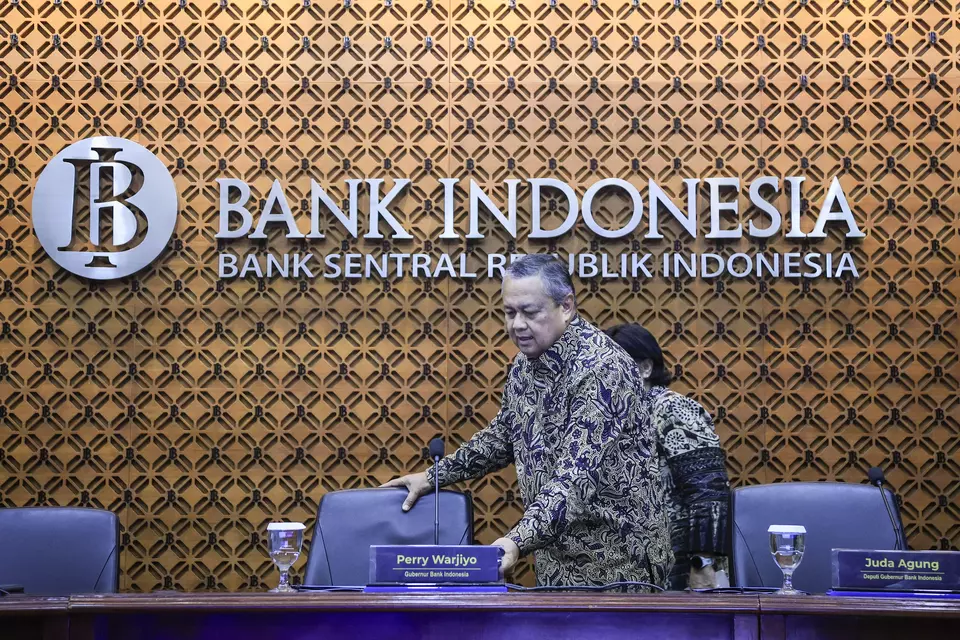
Jakarta. Bank Indonesia Governor Perry Warjiyo said the recent shift in Indonesia’s sovereign outlook to negative by Moody’s Ratings does not signal weakening economic fundamentals, emphasizing that domestic growth, inflation, and financial stability remain solid despite heightened global uncertainty.
“Adjustment to the outlook is believed not to reflect a deterioration in Indonesia’s economic fundamentals,” Perry said, noting that the economy expanded 5.39% in the fourth quarter of 2025, bringing full-year growth to 5.1%, while inflation stayed contained at 2.92% within the central bank’s target range. He added that rupiah stability continues to be reinforced through Bank Indonesia’s strong policy commitment, alongside resilient banking liquidity, high capital buffers, and low credit risk.
Moody’s, which maintained Indonesia’s Baa2 sovereign rating while revising the outlook to negative, still projects economic growth to remain around 5% in the near to medium term, with fiscal deficits staying below 3% of GDP and monetary policy continuing to support price stability. The agency also expects government debt ratios to remain lower than similarly rated peers, although it highlighted the need to strengthen state revenue to sustain growth while preserving macroeconomic and financial stability.
Bank Indonesia said medium-term prospects remain favorable, forecasting 2026 growth at 4.9%–5.7%, supported by stronger domestic demand and the continued impact of coordinated government and central bank policies. Growth is projected to accelerate further in 2027 to 5.1%–5.9%, with inflation expected to remain under control.
External resilience also remains intact, the central bank said. Indonesia recorded a $2.51 billion trade surplus in December 2025, driven by both natural-resource and manufacturing exports. Foreign-exchange reserves rose to $156.5 billion at year-end, equivalent to 6.4 months of imports or 6.3 months of imports and government external debt payments, well above the international adequacy standard of about three months of imports.
Looking ahead, Bank Indonesia expects the current account deficit in 2026 to stay low at 0.1%–0.9% of GDP, while the rupiah is projected to remain stable with a strengthening bias, supported by attractive yields, low inflation, and solid growth prospects. Financial system stability is also seen holding firm on ample liquidity, strong bank capital, and contained credit risk.
The central bank said it will continue strengthening its policy mix to safeguard macroeconomic and financial stability while supporting sustainable growth, working closely with the Financial System Stability Committee and the government to enhance policy communication and maintain market confidence amid rising global uncertainty.
Tags: Keywords:Related Articles

Bank Indonesia Cuts Foreign Currency Purchase Threshold to $10,000
Indonesia is tightening foreign exchange rules by lowering thresholds for undocumented currency purchases and transfers.
Bank Indonesia Lifts BI Rate to 5.75%
Bank Indonesia raised its benchmark rate to 5.75% to support the rupiah as the currency weakened to Rp 17,796 per US dollar.
Government Debt Growth Drives Indonesia’s External Debt to $439.8B
Indonesia's external debt rose to $439.8 billion in April as higher government borrowing offset lower private debt.
Bank Indonesia Says Higher Rates Are Attracting Foreign Capital Back
Foreign investor participation increased in SRBI instruments following the central bank's June 10 auction.
Jakarta Stocks Sink 4.22% to Year's Low as Global Rout Sparks Sell-Off
JCI plunged as much as 4.22% to its lowest level this year as global market turmoil and domestic concerns rattled investors.
Rupiah Hits Record Low Against Singapore Dollar at Rp 14,029
Rupiah hit a record Rp 14,029 per Singapore dollar and neared Rp 18,000 per US dollar despite BI's market interventions.
BI Raises Rates to Defend Rupiah, Attract Foreign Capital
BI says its rate hike aims to stabilize the rupiah and lure foreign capital amid global market pressures and rising dollar demand.
Indonesia Posts $9.1 Billion Balance of Payments Deficit in First Quarter
Indonesia recorded a $9.1 billion balance of payments deficit in the first quarter as global uncertainty weighed on trade and capital flows.
Indonesia's Exporters Can Hold Proceeds Onshore in Chinese Yuan
In about a week from now, most exporters of natural resources must park their earnings onshore for at least a year.
Bank Indonesia Allows Export Earnings Deposits in Non-US Currencies
Bank Indonesia has expanded allowable currencies for export earnings deposits, reducing reliance on the US dollar.The Latest

Dear Mr. President, Don’t Skip ASEAN Summits
Despite calls for Prabowo to stay home, the Indonesian leader still needs to attend ASEAN summits.
PLN Rushes Coal Supplies After Power Outages Hit Java
PLN is rushing to secure coal supplies after shortages triggered rolling blackouts across Java, disrupting businesses and daily life.
Japan-Backed ADB Invests in Indonesia’s Human Capital
As many as 399 Indonesian awardees have joined the ADB-Japan Scholarship Program from 1988 to 2024.
Indonesian Stocks Rise Despite Foreign Outflows as MSCI Review Looms
Indonesia's JCI rose 2.8% as easing geopolitical tensions offset foreign outflows, MSCI concerns and rupiah pressures.
