Federal Reserve Cuts Its Key Rate by Quarter-Point
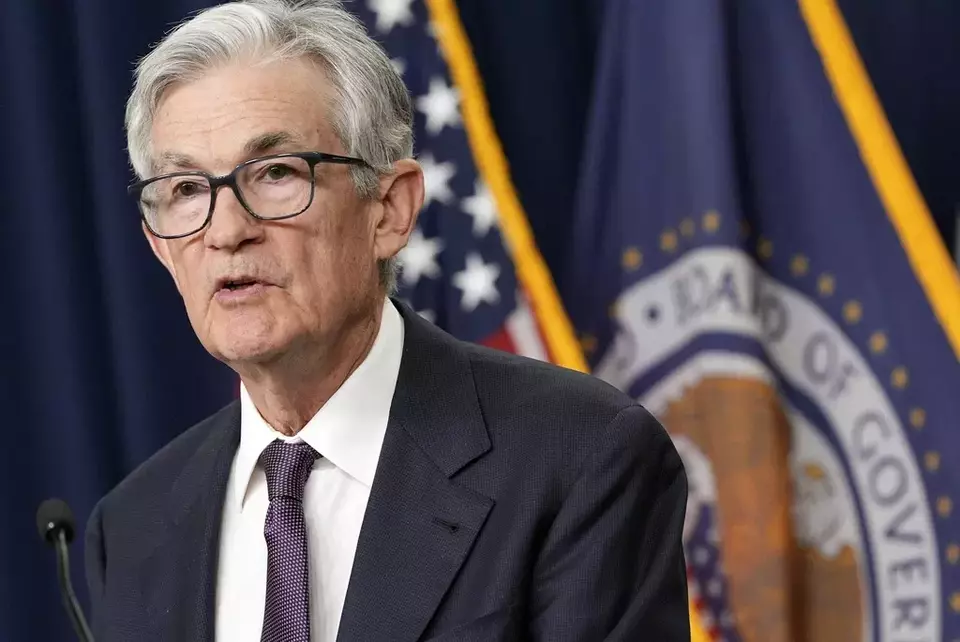
Washington. The Federal Reserve cut its key interest rate Wednesday by a quarter-point — its third cut this year — but also signaled that it expects to reduce rates more slowly next year than it previously envisioned, mostly because of still-elevated inflation.
The Fed’s 19 policymakers projected that they will cut their benchmark rate by a quarter-point just twice in 2025, down from their estimate in September of four rate cuts. Their new projections suggest that consumers may not enjoy much lower rates next year for mortgages, auto loans, credit cards and other forms of borrowing.
The central bank's expectation of just two rate cuts in 2025 rattled Wall Street, sending stock prices plummeting in the worst day for the market in four months. The Dow Jones Industrial Average closed down more than 1,100 points, roughly 2.5 percent. The Nasdaq composite was hit worse: It sank about 3.5 percent Wednesday.
At a news conference, Chair Jerome Powell underscored that policymakers are slowing their rate reductions as their benchmark rate nears a level that policymakers refer to as “neutral” — the level that is thought to neither spur nor hinder the economy.
Wednesday's projections suggest that the policymakers think they may be close to that level. Their benchmark rate stands at 4.3 percent after the latest rate cut, which followed a steep half-point reduction in September and a quarter-point cut last month.
“I think that a slower pace of (rate) cuts really reflects both the higher inflation readings we’ve had this year and the expectations that inflation will be higher" in 2025, Powell said. "We’re closer to the neutral rate, which is another reason to be cautious about further moves.”
At his news conference, Powell acknowledged that at least some Fed officials have begun to assess the potential effects of President-elect Donald Trump's policies on the economy and inflation. The Fed chair noted that some policymakers think that since the election, the future path of inflation has become harder to gauge. Trump's threats to impose tariffs on all imports and to engage in mass deportations of migrants could worsen inflation next year.
“It’s kind of common-sense thinking that when the path is uncertain, you go a little bit slower,” Powell said. “It’s not unlike driving on a foggy night or walking into a dark room with furniture.”
This year’s Fed rate reductions have marked a reversal after more than two years of high rates, which largely helped tame inflation but also made borrowing painfully expensive for American consumers.
But now, the Fed is facing a variety of challenges as it seeks to complete a “soft landing” for the economy, whereby high rates manage to curb inflation without causing a recession. Chief among them is that inflation remains sticky: According to the Fed’s preferred gauge, annual “core” inflation, which excludes the most volatile categories, was 2.8% in October. That is still persistently above the central bank’s 2% target.
At the same time, the economy is growing briskly, which suggests that higher rates haven’t much restrained the economy. As a result, some economists — and some Fed officials — have argued that borrowing rates shouldn’t be lowered much more for fear of overheating the economy and re-igniting inflation.
On the other hand, the pace of hiring has cooled significantly since 2024 began, a potential worry because one of the Fed’s mandates is to achieve maximum employment.
“We don’t think we need further cooling in the labor market to get inflation below 2%,” Powell said at his news conference.
The unemployment rate, while still low at 4.2%, has risen nearly a full percentage point in the past two years. Concern over rising unemployment contributed to the Fed’s decision in September to cut its key rate by a larger-than-usual half point.
Asked why the central bank envisions any rate cuts in 2025 given still-elevated inflation, Powell noted that the Fed's latest projections “have core inflation coming down to 2.5 percent next year."
“That would be significant progress,” he said. “We’d be seeing meaningful progress to get inflation down to that level.”
The Fed chair added: “We and most other forecasters still feel that we are on track to get down to 2 percent. It might take a year or two from here.”
Powell acknowledged that Fed officials are seeking "to understand ways tariffs can affect inflation and the economy and how to think about that.”
The Fed's uncertainty about the economy's future path was underscored by the quarterly economic projections the Fed issued Wednesday. The policymakers now expect overall inflation, as measured by their preferred gauge, to rise slightly from 2.3 percent now to 2.5 percent by the end of 2025. That is far below its peak of 7.2 percent in June 2022.
Even so, the prospect of slightly higher inflation makes it harder for the Fed to reduce borrowing costs because high interest rates are its principal weapon against inflation.
“From here, it’s a new phase," Powell said, "and we’re going to be cautious about new cuts.”
Tags: Keywords:Related Articles

Federal Reserve Keeps Key Rate Unchanged Even as 4 Officials Dissent
The dissents could renew tension between the Trump administration and the bank presidents.
Kevin Warsh Heads to Full Senate Vote for Fed Chair
Warsh is a former top Fed official but has also been a sharp critic of the institution and Powell’s leadership.
Reverses Gains, JCI Slips 0.61% as Middle East Risks Keep Investors on Edge
Indonesian stocks turned lower as geopolitical risks and oil supply fears overshadowed China’s improving data.
Antam Gold Edges Lower While Global Bullion Holds Above $4,500 on Fed Signals
Antam gold falls Rp 10,000 to Rp 2.807M as prices hold near $4,510, supported by Fed’s cautious stance and geopolitical risks.
Who Is Kevin Warsh, Trump’s Pick to Lead the Federal Reserve?
Trump’s pick for Fed chair, Kevin Warsh, is a former governor and crisis-era adviser who has called for major changes at the central bank.
Indonesia Shares Set New Record High, Rise Nearly 1%
JCI closed higher, up 0.94% to 9,032, staying in positive territory as regional markets advanced and sentiment improved.
JCI Opens Above 9,000 as US Inflation Stays in Focus
JCI opens above 9,000 at a fresh record, supported by stable US inflation data and optimism over Indonesia’s semiconductor push.The Latest

Dear Mr. President, Don’t Skip ASEAN Summits
Despite calls for Prabowo to stay home, the Indonesian leader still needs to attend ASEAN summits.
PLN Rushes Coal Supplies After Power Outages Hit Java
PLN is rushing to secure coal supplies after shortages triggered rolling blackouts across Java, disrupting businesses and daily life.
Japan-Backed ADB Invests in Indonesia’s Human Capital
As many as 399 Indonesian awardees have joined the ADB-Japan Scholarship Program from 1988 to 2024.
Indonesian Stocks Rise Despite Foreign Outflows as MSCI Review Looms
Indonesia's JCI rose 2.8% as easing geopolitical tensions offset foreign outflows, MSCI concerns and rupiah pressures.
World Cup 2026: Paraguay Holds Off Turkey With 10 Men to Keep Knockout Hopes Alive
Matias Galarza scored after 65 seconds as 10-man Paraguay beat Turkey 1-0, eliminating the Turks and securing first place for the US.Most Popular