



Indonesia Ends Diesel Imports This Year on Biodiesel Success
Bogor. Indonesia has stopped importing low-grade diesel fuel since the start of this year, supported by the success of its 40% biodiesel blending program (B40), Energy and Mineral Resources Minister Bahlil Lahadalia said on Wednesday.
The biodiesel blend is set to increase to 50% (B50) starting July 1, which is expected to further boost the domestic supply of low-grade diesel, locally known as solar.
“Our diesel fuel demand in 2026 is around 40 million kiloliters. With the B40 program and soon B50, starting this year we no longer need to import diesel. This is the first time since the founding of the republic that we are no longer importing solar,” Bahlil said in a press statement.
The government is also working to reduce imports of liquefied petroleum gas (LPG) by exploring alternative fuels such as dimethyl ether (DME) and compressed natural gas (CNG), both currently under evaluation.
CNG has already been adopted by several industries, including hospitality and food services.
Strong Energy Resilience
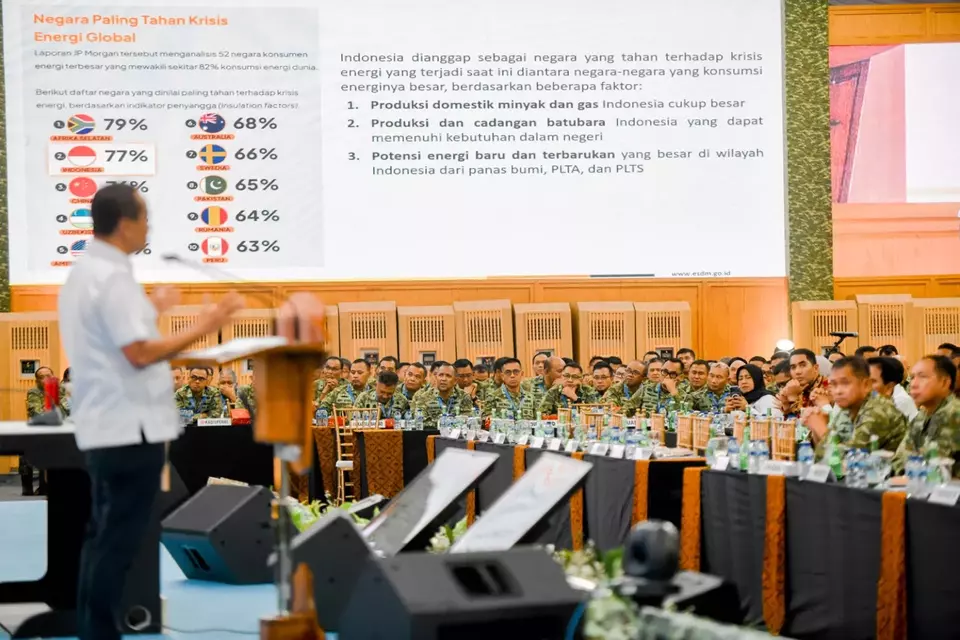
Amid global geopolitical tensions that continue to disrupt energy supply chains, Bahlil said Indonesia has been ranked among the most energy-resilient countries by JPMorgan Asset Management.
According to the firm’s Eye on the Market report, which analyzed 52 of the world’s largest energy-consuming countries representing around 82% of global energy demand, Indonesia ranked second globally -- just behind South Africa and ahead of China.
Indonesia’s resilience is attributed to its substantial domestic oil and gas production, as well as large coal reserves that continue to meet domestic demand. The country’s vast renewable energy potential also supports its long-term energy independence.
Bahlil said Indonesia met its oil production target of 605,000 barrels per day in 2025, with the 2026 target raised slightly to 610,000 bpd.
In addition, recent exploration at the Ganal Block off East Kalimantan has revealed significant new resources, including an estimated 5 trillion cubic feet of gas and 300 million barrels of condensate.
The block is being developed by Eni and Sinopec, with production expected to begin in 2028.
The government said these developments strengthen Indonesia’s efforts to reduce reliance on imported fuels and enhance long-term energy security.
Tags: Keywords:Related Articles

Indonesia Allocates Rp 10.3 Trillion to Bring Electricity to Thousands of Villages
Indonesia will spend Rp 10.3 trillion in 2026 to expand electricity access to thousands of underserved villages.
Indonesia Faces Medium-Calorie Coal Supply Shortage for Power Plants, Minister Says
Indonesia faces a shortage of medium-calorie coal for power plants, prompting a review of supply and pricing policies.
Indonesia on Track to Launch B50 Palm Oil Biodiesel in July
Indonesia has done road trials on heavy equipment and trains as the country will soon mandate the use of B50 palm oil-based biodiesel.
No CNG Allocation in 2027 Budget as Indonesia Seeks to Cut LPG Imports
Indonesia's 2027 budget keeps LPG subsidies unchanged, with no dedicated funding for the planned CNG transition.
Indonesia Allocates $84.6 Million for Electric Stoves and E-Motorcycle Conversion Program
Indonesia will spend Rp 1.5 trillion on electric stoves and e-motorcycles to cut fuel imports and boost clean energy use.
Indonesia Spends Rp 120 Trillion a Year on LPG Imports, Pushes Electric Stove Program
The initiative is also intended to reduce the fiscal burden of subsidizing 3-kilogram LPG cylinders widely used by low-income households.
Indonesia Eyes Up to 19 Million Kiloliters of Subsidized Diesel in 2027
Subsidized diesel remains heavily supported by the government and is currently sold at Rp 6,800 ($0.38) per liter.
Bahlil Rejects Coal Shortage Claims Behind Widespread Power Outages
Bahlil says recent power outages were caused by technical issues, not coal shortages, with domestic supplies remaining secure.
Indonesia Holds Subsidized Fuel Prices as Drivers Abandon Pertamax
Indonesia kept subsidized fuel prices unchanged despite a steep Pertamax hike that triggered long queues for cheaper fuel.
Indonesia Assigns Lemigas, Not Pertamina, to Handle Russian Oil Imports
Indonesia plans to use state energy agency Lemigas, rather than Pertamina, to manage crude oil imports from Russia under a new regulation.The Latest

Dear Mr. President, Don’t Skip ASEAN Summits
Despite calls for Prabowo to stay home, the Indonesian leader still needs to attend ASEAN summits.
PLN Rushes Coal Supplies After Power Outages Hit Java
PLN is rushing to secure coal supplies after shortages triggered rolling blackouts across Java, disrupting businesses and daily life.
Japan-Backed ADB Invests in Indonesia’s Human Capital
As many as 399 Indonesian awardees have joined the ADB-Japan Scholarship Program from 1988 to 2024.
Indonesian Stocks Rise Despite Foreign Outflows as MSCI Review Looms
Indonesia's JCI rose 2.8% as easing geopolitical tensions offset foreign outflows, MSCI concerns and rupiah pressures.
