



Indonesia Leverages $626 Billion Market to Expand Global Halal Role
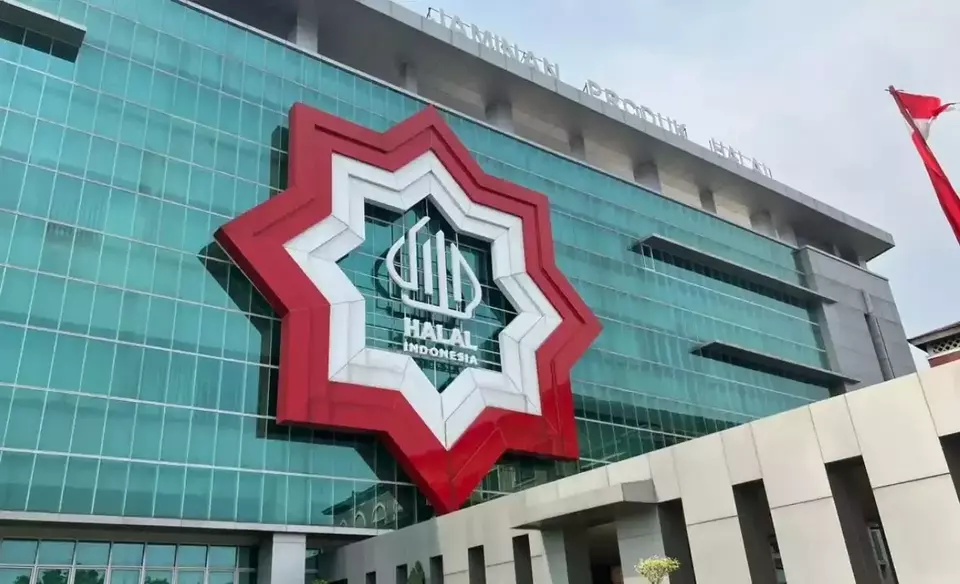
Jakarta. Indonesia’s halal industry has a potential domestic market worth Rp 11.18 quadrillion ($626.6 billion), driven by the country’s 248.6 million Muslim consumers and rising global demand for halal products, Deputy Industry Minister Faisol Riza said on Thursday.
Faisol said the vast domestic market presents a strategic opportunity to strengthen Indonesia’s halal manufacturing ecosystem and expand its role in the global halal value chain.
Indonesia’s Muslim population accounts for 87.13% of the total population, while national household consumption reached Rp 12.83 quadrillion in 2025. Of that amount, spending by Muslim consumers is estimated at Rp 11.18 quadrillion.
Globally, Muslim spending across six sectors of the Islamic economy reached $2.6 trillion in 2024 and is projected to rise to US$ 3.56 trillion by 2029.
“We must capitalize on this opportunity to improve the competitiveness of Indonesia’s halal industry in international markets,” Faisol said at the launch of the Halal Indonesia International Industry Expo (Halal Indo) 2026 in Jakarta.
The Industry Ministry reported continued growth in the domestic halal sector. As of the first quarter of 2026, Indonesia had issued 2.66 million halal certificates across industrial subsectors, covering more than 5.01 million products.
The food industry accounted for 2.31 million certificates, followed by beverages with 338,757 certificates, and chemicals and pharmaceuticals with 5,590 certificates.
Faisol said that the growing number of certified products reflects a stronger industry commitment to halal standards and greater consumer confidence in domestic products.
Indonesia will begin enforcing mandatory halal certification for a broader range of products on Oct. 18, 2026, under Law No. 33/2014 on Halal Product Assurance and Government Regulation No. 42/2024.
The policy extends the phased implementation launched in October 2024 for medium and large enterprises. Starting next year, mandatory certification will cover products from micro and small businesses as well as imported goods, in addition to food and beverage products.
Faisol said large manufacturers are generally prepared for the new requirements, but smaller businesses still face several challenges.
“We have continued to provide support, facilitation, and outreach to small businesses that are ready to enter the next phase of implementation,” he said.
He added that closer coordination with the Halal Product Assurance Agency (BPJPH) is needed to streamline certification procedures for smaller enterprises. The ministry has proposed delegating part of the halal inspection and recognition process to its halal industry centers to reduce administrative burdens.
“With stronger coordination, small businesses would no longer need to go back and forth between the ministry and BPJPH. This would make the certification process much easier,” Faisol said.
As part of efforts to strengthen Indonesia’s position in the global halal ecosystem, the Industry Ministry and Dyandra Promosindo will hold Halal Indo 2026 from Sept. 24 to 27 at the Indonesia Convention Exhibition (ICE) BSD City in Tangerang.
Indonesia’s halal exports, including fashion products, reached $8.28 billion in 2024.
The organizers are seeking to build on the success of last year’s event, which attracted 27,340 visitors from 31 countries and featured 346 exhibitors from China, Malaysia, Thailand, the United Arab Emirates, Turkey, and the United Kingdom.
Halal Indo 2025 generated Rp 7.7 billion in transactions and secured Rp 7.2 trillion in investment commitments.
Dyandra Promosindo President Director Daswar Marpaung said the event aims to go beyond a traditional trade exhibition by bringing together industry players, investors, international buyers, regulators, and communities in one collaborative platform.
“Through the participation of leading sectors ranging from food and beverages, fashion, cosmetics, healthcare, and pharmaceuticals to education, tourism, and hospitality, we are confident Halal Indo will strengthen Indonesia’s position as a global halal industry hub,” Daswar said.
Tags: Keywords:Related Articles

Indonesia Leverages $626 Billion Market to Expand Global Halal Role
Indonesia aims to strengthen its halal industry as Muslim consumer spending reaches Rp 11.18 quadrillion.
Government Debt Growth Drives Indonesia’s External Debt to $439.8B
Indonesia's external debt rose to $439.8 billion in April as higher government borrowing offset lower private debt.
Fuel Subsidies Largely Benefit Private Vehicles, Not Public Transport
An expert urges Indonesia to redirect fuel subsidies to public transport, saying 93% now benefits private vehicles.
MSME Tax Overhaul May Slow Expansion, Hiring: Economists
Economists warn Indonesia's narrower MSME tax incentive scheme could raise costs, slow expansion, and weigh on hiring
Economic Buffer Under Pressure as Middle Class Continues to Shrink
BI’s surprise rate hike and a 32% fuel price increase are squeezing Indonesia’s middle class, raising risks of economic decline.
Economist: BI’s Rate Hike Seeks to Prevent Confidence Crisis
Bank Indonesia's surprise rate hike underscores mounting rupiah pressure, but economists warn monetary policy alone is not enough.
Rate Hike, Fuel Price Surge Put Indonesia’s Middle Class Under Pressure
Indonesia's middle class faces mounting pressure as higher interest rates and fuel prices squeeze household budgets
Economist Calls for Investment Reform as Indonesia's FDI Ratio Falls to 1.61%
Indonesia must shift from resource extraction to value creation as FDI falls behind regional peers, economist Lili Yan Ing says.
Indonesia Foreign Exchange Reserves Fall to $144.9 Billion in May Amid Debt Payments
Indonesia's foreign exchange reserves fell to $144.9 billion in May, but remained sufficient to cover 5.6 months of imports.
Indonesia's Foreign Capital Inflows Reach Rp 60.9 T in Q2
Indonesia recorded Rp 60.9 trillion in net foreign inflows in Q2, led by strong demand for government bonds and SRBI.The Latest

Dear Mr. President, Don’t Skip ASEAN Summits
Despite calls for Prabowo to stay home, the Indonesian leader still needs to attend ASEAN summits.
PLN Rushes Coal Supplies After Power Outages Hit Java
PLN is rushing to secure coal supplies after shortages triggered rolling blackouts across Java, disrupting businesses and daily life.
Japan-Backed ADB Invests in Indonesia’s Human Capital
As many as 399 Indonesian awardees have joined the ADB-Japan Scholarship Program from 1988 to 2024.
Indonesian Stocks Rise Despite Foreign Outflows as MSCI Review Looms
Indonesia's JCI rose 2.8% as easing geopolitical tensions offset foreign outflows, MSCI concerns and rupiah pressures.
