



Indonesia-EU Trade Deal Set to Boost Exports by 60% From 2027
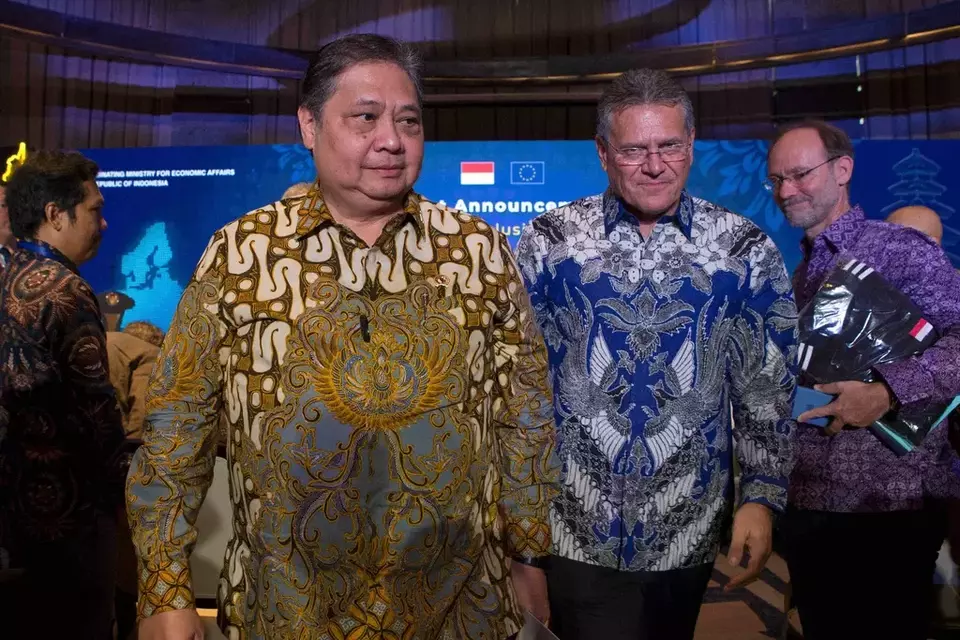
Nusa Dua, Bali. Indonesia’s exports to the European Union are projected to rise by up to 60 percent in the early phase of the Comprehensive Economic Partnership Agreement (CEPA), which is expected to take effect on January 1, 2027.
The deal was signed Tuesday in Bali by Coordinating Minister for Economic Affairs Airlangga Hartarto and European Commissioner for Trade and Economic Security Maroš Šefčovič, marking the conclusion of nearly a decade of negotiations that began in July 2016.
“Indonesia’s industries, which currently employ around five million people, have promising prospects ahead as the market becomes significantly larger,” Airlangga said in a statement.
Tariff Cuts and Export Opportunities
CEPA will remove more than 98 percent of tariffs between the two sides, boosting the competitiveness of Indonesia’s leading exports -- including palm oil, coffee, textiles, footwear, and furniture -- in the European market. The agreement also opens the door for high-tech exports such as smartphones and telecommunications equipment, diversifying Indonesia’s export base and strengthening its industrial competitiveness.
The trade pact is expected to encourage investment, facilitate technology transfer, and deepen Indonesia-EU integration into global supply chains.
The EU is already one of Indonesia’s key economic partners. In 2024, bilateral trade totaled $30.4 billion, with Indonesia recording a $4.4 billion surplus. The EU also ranked as Indonesia’s fifth-largest investor between 2019 and 2024, with cumulative investment reaching $15.6 billion.
Airlangga stressed that the benefits of CEPA will extend beyond large corporations to small and medium enterprises. “When Indonesia and the EU work together to expand markets, I am confident we can bring significant growth not only to Europe but also to the Indo-Pacific region, where Indonesia is the largest economy in ASEAN,” he said.
He added that the agreement also covers a digital cluster, strengthening Indonesia’s position in the rapidly expanding digital economy. European technology and infrastructure support, he noted, will help maximize this potential.
European Perspective
European Commission President Ursula von der Leyen welcomed the deal, saying CEPA will deliver major benefits to EU farmers and industries by reducing tariffs on agri-food products, protecting traditional European goods, and boosting sectors such as automotive, chemicals, and machinery.
She said EU exporters will save about €600 million annually in duties, making European products more affordable and accessible for Indonesian consumers.
“We have made a commitment to double down on diversification and partnerships, to further support EU jobs and boost growth. Our deal with Indonesia creates new opportunities for businesses and farmers in a major and growing economy. This also provides us with a stable and predictable supply of critical raw materials, essential for Europe’s clean tech and steel industry,” von der Leyen said.
Tags: Keywords:Related Articles

Germany Says Trade Still Unharmed by Indonesia’s One-Gate Export
Indonesia’s export system shake-up has no immediate impact on trade, palm oil importer Germany says.
Indonesia Prepares Stimulus as Pertamax Price Jumps 32%
Indonesia is preparing stimulus measures after Pertamax fuel prices surged 32%, raising inflation concerns.
Indonesia Targets EU Trade Deal Ratification in 2026, Implementation by Early 2027
Indonesia aims to ratify its trade agreement with the European Union this year, paving the way for implementation in 2027.
US 10% Forced Labor Tariff on Indonesia to Apply After July 24
The US will hold off on implementing the forced labor tariff until after July 24 to avoid overlapping with the current import tax.
Indonesia Aims to Speed Up EU Trade Pact Ratification, OECD Seat
Indonesia's OECD membership bid is currently in a technical review phase.
Govt Extends Weekly WFH Policy After Fuel Use Drops 9%
The government says once-a-week remote work helped cut subsidized fuel consumption as energy costs remain volatile.
Airlangga Says Single-Gate Export Policy Won’t Restrict Businesses
Airlangga said Indonesia’s new single-gate export policy aims to tighten oversight and keep export earnings onshore.
Indonesia Details New Export Earnings Rules for Natural Resource Companies
Exporters from non-oil sectors must place 100% of export proceeds in special accounts at state-owned banks for 12 months.
Airlangga Meets Belarus PM to Boost Economic Partnership
Indonesia and Belarus explore stronger cooperation in food security, energy, trade, and agricultural technology sectors.
Indonesia Pushes Follow-Up Cooperation With Russia Across Key Economic Sectors
Indonesia and Russia agreed to accelerate cooperation in trade, energy, agriculture, and technology under a broader Eurasian strategy.The Latest

Dear Mr. President, Don’t Skip ASEAN Summits
Despite calls for Prabowo to stay home, the Indonesian leader still needs to attend ASEAN summits.
PLN Rushes Coal Supplies After Power Outages Hit Java
PLN is rushing to secure coal supplies after shortages triggered rolling blackouts across Java, disrupting businesses and daily life.
Japan-Backed ADB Invests in Indonesia’s Human Capital
As many as 399 Indonesian awardees have joined the ADB-Japan Scholarship Program from 1988 to 2024.
Indonesian Stocks Rise Despite Foreign Outflows as MSCI Review Looms
Indonesia's JCI rose 2.8% as easing geopolitical tensions offset foreign outflows, MSCI concerns and rupiah pressures.
