



‘Lawmakers’ Review First’: Indonesia on What Comes Next After US Deal Signing
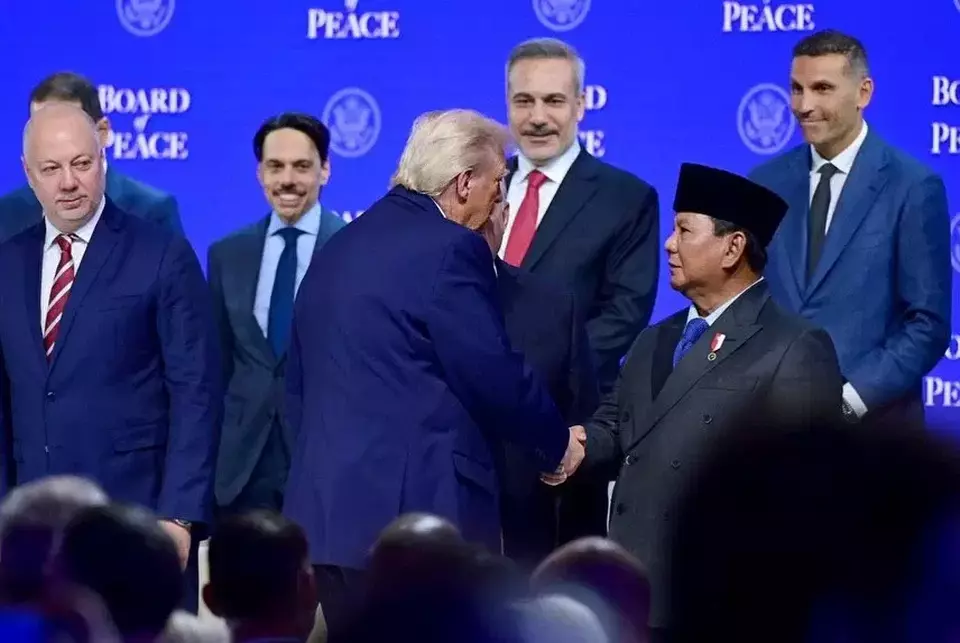
Jakarta. A senior Indonesian minister said Tuesday that the US tariff deal Jakarta would sign soon still needed to go through lawmakers, similar to other trade pacts.
Chief Economic Affairs Minister Airlangga Hartarto restated that both Indonesian and American sides were putting the final touches to the document. The Jakarta Globe asked Airlangga about what comes next after the signing, particularly on whether the terms can automatically kick in or still have to go through the ratification process. Airlangga signaled that it would be the latter.
“The [US government] will issue an executive order to be reported to Congress. Indonesia, too, has to inform the House of Representatives,” Airlangga told a presser on the sidelines of the 2026 Indonesia Economic Summit.
For context, ratification is the process that will see the government seeking lawmakers’ consent to make the agreed-upon terms official. The House has some trade pacts pending for ratification, including with Peru. Airlangga did not go into more details, but claimed the so-called “legal drafting had reached 90% completion”. This is a separate process where both sides have lawyers making sure the text is legally sound. He did not disclose the final tariff rates and only repeated his statement that the signing would hinge on President Prabowo Subianto and his American counterpart Donald Trump’s availability.
“We are waiting for the leaders’ schedule,” Airlangga said, when asked if a Prabowo-Trump meeting could take place this month.
Malaysia's agreement with Washington showed that the terms would "enter into force" 60 days after both parties exchanged written notifications certifying completion of their "applicable legal procedures". The close neighbor signed the document in late October 2025.
Jakarta's tariff negotiations have been embroiled in rumors in recent months, including the presence of a poison pill clause aimed at excluding China from the region. Media reports claimed that the Trump government demanded Jakarta buy US-made drones for surveillance in the waters near the highly contested South China Sea. Jakarta’s membership in the Board of Peace for Gaza also sparked questions on whether this was part of the tariff negotiations. Airlangga has denied all claims.
Jakarta has been seeking to placate Trump’s wrath over trade imbalances. The talks, which already hit its 9-month mark, saw Indonesia making major concessions, including a $15 billion energy import pledge and removal of tariff barriers. Washington agreed to rescind the import tax on Indonesian goods from a punitive 32% to 19%. Airlangga claimed that the Trump government had agreed to free Indonesian palm oil from tariffs. The minister’s aide Susiwijono Moegiarso recently told the press that the pact would have a “nice surprise”, while signaling it would provide a boon for Indonesia’s key export sectors.
Trump’s capricious tariff policies did not stop the trade gap from widening. The Central Statistics Agency (BPS) revealed that Indonesia’s surplus with the US rose from $14.52 billion in 2024 to $18.11 billion the following year.
Tags: Keywords:Related Articles

Tariff-Free Indonesian Palm Oil to Keep Dominance in US
Indonesia will not lose its market dominance to rival producer Malaysia ahead of a Section 301 tariff exemption.
From 32% to 10% to 18%: Indonesia Lives Under Trump's Tariff Uncertainties
Indonesia has been trying to navigate US trade uncertainties, but officials are confident that the tariffs won't derail exports.
Indonesia Prepares Stimulus as Pertamax Price Jumps 32%
Indonesia is preparing stimulus measures after Pertamax fuel prices surged 32%, raising inflation concerns.
Trump to Exempt Indonesian Palm Oil from Tariffs
Indonesia says rubber and coffee will also gain US tariff exemptions.
Indonesia Targets EU Trade Deal Ratification in 2026, Implementation by Early 2027
Indonesia aims to ratify its trade agreement with the European Union this year, paving the way for implementation in 2027.
Final US Tariff on Indonesia to Reach 18%
Indonesia also says its US-bound textile exports will get tariff reductions.
US 10% Forced Labor Tariff on Indonesia to Apply After July 24
The US will hold off on implementing the forced labor tariff until after July 24 to avoid overlapping with the current import tax.
Govt Extends Weekly WFH Policy After Fuel Use Drops 9%
The government says once-a-week remote work helped cut subsidized fuel consumption as energy costs remain volatile.
Airlangga Says Single-Gate Export Policy Won’t Restrict Businesses
Airlangga said Indonesia’s new single-gate export policy aims to tighten oversight and keep export earnings onshore.
Indonesia Details New Export Earnings Rules for Natural Resource Companies
Exporters from non-oil sectors must place 100% of export proceeds in special accounts at state-owned banks for 12 months.The Latest

Dear Mr. President, Don’t Skip ASEAN Summits
Despite calls for Prabowo to stay home, the Indonesian leader still needs to attend ASEAN summits.
PLN Rushes Coal Supplies After Power Outages Hit Java
PLN is rushing to secure coal supplies after shortages triggered rolling blackouts across Java, disrupting businesses and daily life.
Japan-Backed ADB Invests in Indonesia’s Human Capital
As many as 399 Indonesian awardees have joined the ADB-Japan Scholarship Program from 1988 to 2024.
Indonesian Stocks Rise Despite Foreign Outflows as MSCI Review Looms
Indonesia's JCI rose 2.8% as easing geopolitical tensions offset foreign outflows, MSCI concerns and rupiah pressures.
