Trump Threatens 100% Tariff on Foreign-Made Films
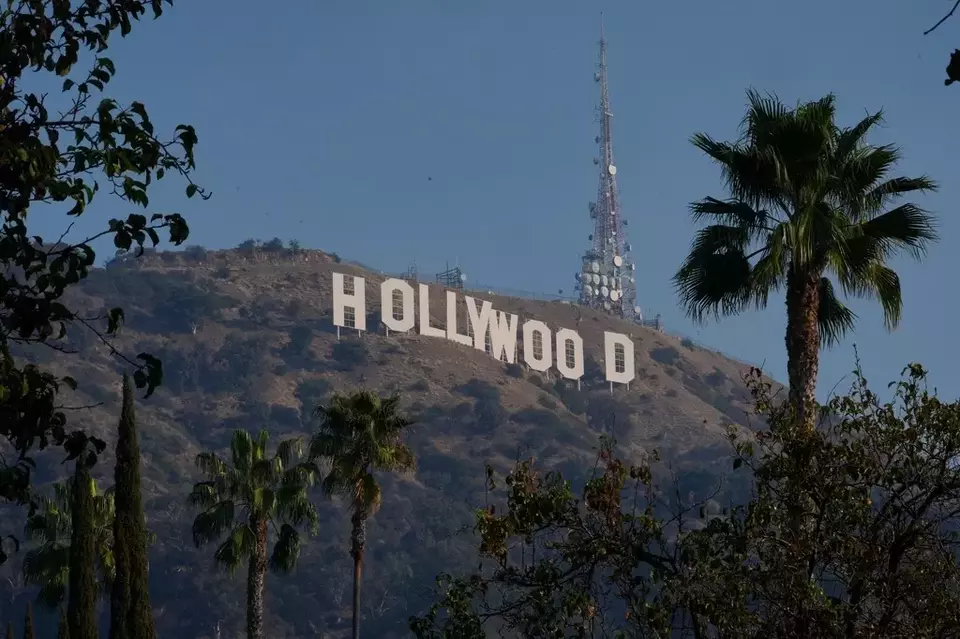
Washington. President Donald Trump says he will impose a 100 percent tariff on movies made outside the United States, a sweeping but vague directive aimed at protecting an industry that America already dominates.
Claiming Hollywood production “has been stolen,” Trump wrote on his Truth Social platform: “I will be imposing a 100 percent tariff on any and all movies that are made outside of the United States.”
How such tariffs would work remains unclear, since films and TV shows can be transmitted digitally without crossing ports. It is also uncertain whether the measure would apply to US productions shot abroad, such as the James Bond or Jason Bourne franchises, or what legal authority the president would invoke.
Trump first floated the idea in May but has yet to specify when the tariffs would take effect.
Movies make an unusual front in a trade war. “Unlike any other country’s film industry, US movies are the most accessible, well-known, and best performing due to the numerous language options and worldwide reach provided by US-based studios,” Jacob Jensen of the American Action Forum, a center-right think tank, wrote in July.
The US already holds a commanding lead in global film exports. According to the Motion Picture Association, American films generated $22.6 billion in exports in 2023, creating a $15.3 billion trade surplus. A recent report noted that US films “generated a positive balance of trade in every major market in the world.”
Barry Appleton, co-director of the Center for International Law at the New York Law Center, warned that other countries could retaliate with levies on US films or other services. “Brand America is way, way ahead,” he said. “What this policy does is actually cook the golden goose that’s laying the golden eggs.”
Tariffs have long been Trump’s go-to tool to extract concessions from trading partners, reversing decades of U.S. support for lower trade barriers. He has imposed steep duties on a wide range of imports, from heavy trucks and pharmaceuticals to kitchen cabinets and bathroom vanities.
But movies raise thornier issues because they involve intellectual property and services rather than physical goods.
Why target films?
Trump has invoked national security concerns, the same justification he has used in other tariff cases. In May, he claimed the American movie industry was “dying a very fast death” as foreign governments lured away productions with incentives.
Hollywood has faced setbacks in recent years, including the COVID-19 pandemic, the 2023 guild strikes, and wildfires in California. At the same time, production has shifted from California to other US states such as Georgia and New Mexico, and abroad to countries like Canada.
Still, international markets remain critical. Overseas audiences accounted for more than 70 percent of Hollywood’s box office revenue last year, said Heeyon Kim, a strategy professor at Cornell University. Tariffs and retaliation could cost the US billions in lost earnings and thousands of jobs, she warned.
“This makes no sense,” Kim said. “Such tariffs could undermine a thriving part of the US economy.”
The International Alliance of Theatrical Stage Employees, representing behind-the-scenes workers, acknowledged the threat from international competition but recommended federal production tax incentives instead of punitive tariffs.
Can tariffs even apply?
Experts doubt it. “Traditional tariffs apply to physical imports, but film production is primarily digital,” said Ann Koppuzha, a business law lecturer at Santa Clara University. She noted that film services might be taxed, but that would require congressional approval.
Film production is also inherently global. Many US blockbusters are filmed abroad to take advantage of tax breaks. Warner Bros.’ Harry Potter series, for instance, was almost entirely shot in the U.K.
“When you make blanket rules, you miss the nuance of how production works,” said industry veteran Steven Schiffman of Georgetown University. “Sometimes you just need to go on location because it’s too expensive to replicate on a soundstage.”
Risks of retaliation
Imposing tariffs on foreign-made films could open the door to retaliation in other cultural sectors. Some countries may revive screen quotas to boost domestic films, reducing Hollywood’s access to overseas markets. Others could target related US intellectual property, such as music or gaming.
“There’s no precedent,” Koppuzha said. “And even if it were possible, the blowback could be severe.”
For now, Trump’s movie tariff threat remains more political theater than policy, but one with potentially global consequences if carried out.
Tags: Keywords:Related Articles

From 32% to 10% to 18%: Indonesia Lives Under Trump's Tariff Uncertainties
Indonesia has been trying to navigate US trade uncertainties, but officials are confident that the tariffs won't derail exports.
Trump Calls Off Latest Threats to Strike Iran, Citing Progress in Negotiations
Trump had threatened further escalation earlier Thursday, posting on social media that the US would hit Iran “VERY HARD TONIGHT”.
A War Neither Side Can Control: The Political Costs for Trump and Netanyahu
The US retains military superiority over Iran, but the political trajectory of the war is increasingly slipping beyond its control.
Hegseth Reassures Pacific Allies While Softening China Rhetoric
Hegseth reassured Indo-Pacific allies of U.S. commitment while adopting a more measured tone toward China.
US and Iranian Negotiators Reach Tentative Deal to Extend Ceasefire
Washington and Tehran have repeatedly accused each other of violating the seven-week ceasefire and have traded strikes throughout the week.
Trump Withdraws $10B Suit Against Internal Revenue Service
The decision is part of a deal that would create a $1.7 billion fund to pay allies of the president.
Trump-Xi Meeting Opens in Beijing With Low Expectations on Trade, Security
Trump met Xi in Beijing as both sides opened talks, with little expectation of breakthroughs on Iran, Taiwan and trade.
Rupiah Hit by Global “Perfect Storm,” Weakens to Rp 17,414
Rupiah weakened to Rp 17,414 per dollar as escalating US-Iran tensions and cautious sentiment ahead of US inflation data boosted safe-haven
JCI Dips as Iran-US Tensions Drive Oil to $114
JCI slipped as Hormuz tensions lifted oil to $114, while easing inflation and a trade surplus failed to offset global risks.
JCI Gains 0.22% on Stable Inflation, Trade Surplus Support
JCI rose 0.22% to 6,957 as easing geopolitics and stable inflation offset weak manufacturing signals.The Latest

Dear Mr. President, Don’t Skip ASEAN Summits
Despite calls for Prabowo to stay home, the Indonesian leader still needs to attend ASEAN summits.
PLN Rushes Coal Supplies After Power Outages Hit Java
PLN is rushing to secure coal supplies after shortages triggered rolling blackouts across Java, disrupting businesses and daily life.
Japan-Backed ADB Invests in Indonesia’s Human Capital
As many as 399 Indonesian awardees have joined the ADB-Japan Scholarship Program from 1988 to 2024.
Indonesian Stocks Rise Despite Foreign Outflows as MSCI Review Looms
Indonesia's JCI rose 2.8% as easing geopolitical tensions offset foreign outflows, MSCI concerns and rupiah pressures.
World Cup 2026: Paraguay Holds Off Turkey With 10 Men to Keep Knockout Hopes Alive
Matias Galarza scored after 65 seconds as 10-man Paraguay beat Turkey 1-0, eliminating the Turks and securing first place for the US.Most Popular