Can Trump’s Tariffs Really Pay $2,000 to Every American?
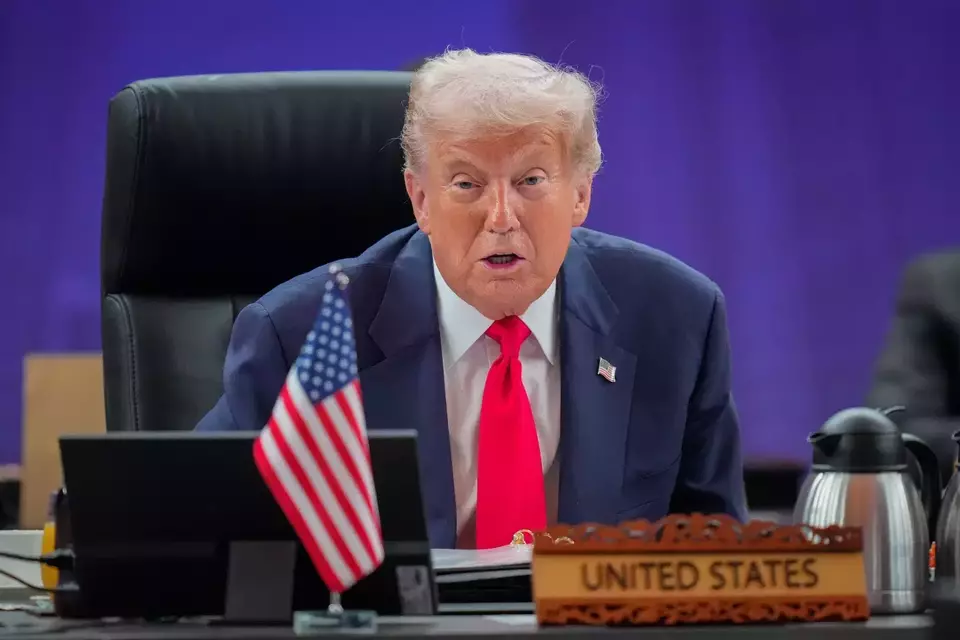
Washington. President Donald Trump has long argued that his tariffs protect US industries, lure factories back home, generate federal revenue, and give him leverage in global negotiations. Now, he’s adding a new claim: that they can finance a cash windfall for American families.
Trump said Sunday on his Truth Social platform that tariff revenue was so strong it could fund “a dividend of at least $2,000 a person (not including high-income people!).” The announcement came five days after Republican losses in Virginia, New Jersey, and other states, setbacks widely attributed to voter frustration over his handling of the economy and persistent inflation.
Budget experts, however, dismissed the idea as unrealistic. The proposal recalled Trump’s earlier talk of “DOGE dividend checks” funded by billionaire Elon Musk’s hypothetical budget cuts, a plan that never materialized.
“The numbers just don’t check out,” said Erica York, vice president of federal tax policy at the nonpartisan Tax Foundation.
Details of the latest proposal remain unclear, including possible income limits or whether payments would extend to children. Even Treasury Secretary Scott Bessent appeared caught off guard. Speaking on ABC’s This Week, Bessent said he hadn’t discussed the plan with Trump and suggested any “dividend” might instead come as a tax reduction rather than direct government checks.
Tariffs did generate $195 billion in revenue in the fiscal year ending Sept. 30, up 153 percent from $77 billion in 2024, but that’s still less than 4 percent of total federal receipts and far short of the $1.8 trillion budget deficit in 2025.
According to John Ricco of Yale University’s Budget Lab, Trump’s tariffs may bring in $200 billion to $300 billion annually. Yet a $2,000 payment to every American, including children, would cost around $600 billion. “It’s clear the revenue coming in would not be adequate,” Ricco said, adding that such payments would also require congressional approval.
Trump’s tariff policies themselves face uncertainty. The US Supreme Court is reviewing whether the administration overstepped by invoking national emergency powers to impose broad import taxes without congressional consent. Several justices expressed skepticism during arguments last week.
If the court strikes them down, the administration could be forced to refund money to importers rather than send checks to households.
Economists note that tariffs are effectively paid by US importers, who typically pass the costs on to consumers through higher prices.
“The dividend plan misses the mark,” said York. “If the goal is to help Americans, the simplest fix is to get rid of the tariffs.”
Related Articles

Tariff-Free Indonesian Palm Oil to Keep Dominance in US
Indonesia will not lose its market dominance to rival producer Malaysia ahead of a Section 301 tariff exemption.
From 32% to 10% to 18%: Indonesia Lives Under Trump's Tariff Uncertainties
Indonesia has been trying to navigate US trade uncertainties, but officials are confident that the tariffs won't derail exports.
Trump Calls Off Latest Threats to Strike Iran, Citing Progress in Negotiations
Trump had threatened further escalation earlier Thursday, posting on social media that the US would hit Iran “VERY HARD TONIGHT”.
A War Neither Side Can Control: The Political Costs for Trump and Netanyahu
The US retains military superiority over Iran, but the political trajectory of the war is increasingly slipping beyond its control.
Hegseth Reassures Pacific Allies While Softening China Rhetoric
Hegseth reassured Indo-Pacific allies of U.S. commitment while adopting a more measured tone toward China.
US and Iranian Negotiators Reach Tentative Deal to Extend Ceasefire
Washington and Tehran have repeatedly accused each other of violating the seven-week ceasefire and have traded strikes throughout the week.
Trump Withdraws $10B Suit Against Internal Revenue Service
The decision is part of a deal that would create a $1.7 billion fund to pay allies of the president.
Indonesia Slams 'Disproportionate' Tariffs at BRICS Talks
BRICS foreign ministers are gathering in New Delhi, and some members have made indirect references to US tariffs.
Trump-Xi Meeting Opens in Beijing With Low Expectations on Trade, Security
Trump met Xi in Beijing as both sides opened talks, with little expectation of breakthroughs on Iran, Taiwan and trade.
Rupiah Hit by Global “Perfect Storm,” Weakens to Rp 17,414
Rupiah weakened to Rp 17,414 per dollar as escalating US-Iran tensions and cautious sentiment ahead of US inflation data boosted safe-havenThe Latest

Dear Mr. President, Don’t Skip ASEAN Summits
Despite calls for Prabowo to stay home, the Indonesian leader still needs to attend ASEAN summits.
PLN Rushes Coal Supplies After Power Outages Hit Java
PLN is rushing to secure coal supplies after shortages triggered rolling blackouts across Java, disrupting businesses and daily life.
Japan-Backed ADB Invests in Indonesia’s Human Capital
As many as 399 Indonesian awardees have joined the ADB-Japan Scholarship Program from 1988 to 2024.
Indonesian Stocks Rise Despite Foreign Outflows as MSCI Review Looms
Indonesia's JCI rose 2.8% as easing geopolitical tensions offset foreign outflows, MSCI concerns and rupiah pressures.
World Cup 2026: Paraguay Holds Off Turkey With 10 Men to Keep Knockout Hopes Alive
Matias Galarza scored after 65 seconds as 10-man Paraguay beat Turkey 1-0, eliminating the Turks and securing first place for the US.Most Popular