



US Government Shuts Down as Trump, Congress Fail to Break Budget Standoff
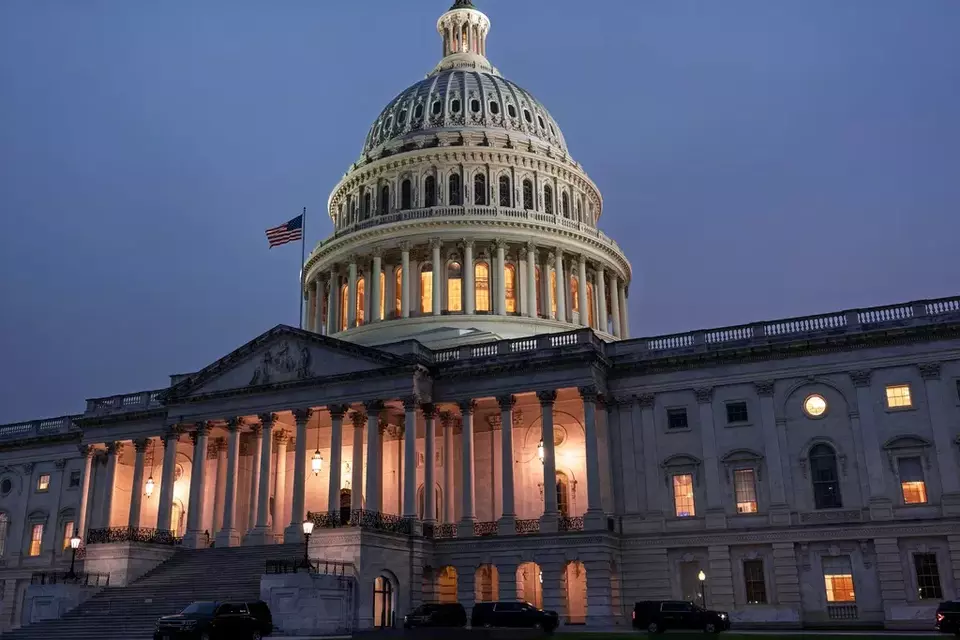
Washington. The United States plunged into a federal government shutdown Wednesday after President Donald Trump and Congress failed to reach a budget deal, halting nonessential services and thrusting the nation into fresh political and economic uncertainty.
Roughly 750,000 federal workers are expected to be furloughed, with some potentially dismissed under Trump administration plans to downsize the government. Agencies will close offices nationwide, while Trump vowed to impose “irreversible” cuts as retribution. His deportation agenda will continue, but education, environmental, and other programs face disruption.
“We don’t want it to shut down,” Trump said at the White House before the midnight deadline.
This is the third shutdown under Trump --and the first since his return to the White House earlier this year-- underscoring the deep partisan divide over budget priorities and a political climate that rewards brinkmanship over compromise.
Democrats and Republicans Dig In
Democrats, typically eager to avoid shutdowns, demanded new funding for expiring Affordable Care Act subsidies covering millions of Americans. Republicans refused to negotiate, encouraging Trump to hold the line. After a White House meeting, the president posted a video mocking Democratic leaders that critics called unserious and racist.
Neither party has offered an easy exit strategy. The standoff threatens to disrupt benefit payments, work contracts, and essential services relied on by millions of Americans.
“What the government spends money on is a demonstration of our country’s priorities,” said Rachel Snyderman, managing director of economic policy at the Bipartisan Policy Center. “Shutdowns only inflict economic cost, fear, and confusion across the country.”
Economic Fallout Looms
The shutdown could have immediate economic effects. The monthly jobs report due Friday may be delayed, depriving the Federal Reserve of critical data as it considers interest rate policy. Goldman Sachs estimates the shutdown could shave 0.15 percentage point off GDP for every week it continues, though growth typically rebounds when operations resume.
Trump’s Office of Management and Budget has instructed agencies not only to furlough workers, as in previous shutdowns, but to prepare for mass layoffs, part of the administration’s effort to shrink the federal workforce.
What Stays Open, What Closes
Medicare and Medicaid services will continue, though delays are likely. The Pentagon and most of the Department of Homeland Security will remain operational. But Trump has warned he will target programs valued by Democrats.
Smithsonian museums will stay open at least through Monday. National parks may face closures amid safety concerns over understaffing.
No Clear Exit
House Republicans passed a short-term funding bill to extend government operations through mid-November, but it failed repeatedly in the Senate, which requires 60 votes for passage. Democrats, leveraging their minority position, blocked the measure to press their demands on health care. A Democratic proposal also failed Tuesday night.
Senate Majority Leader John Thune said Republicans are willing to discuss health care subsidies — but not as part of the shutdown negotiations. Senate Democratic Leader Chuck Schumer, under pressure from his base, is holding firm.
“Americans are hurting with higher costs,” Schumer said after Tuesday’s failed vote.
House Speaker Mike Johnson, who sent lawmakers home two weeks ago after passing the GOP bill, blamed Democrats for the shutdown. “They want to fight Trump,” he said on CNBC. “A lot of good people are going to be hurt because of this.”
The nation endured its longest-ever shutdown --35 days-- during Trump’s first term, when he demanded funds for a border wall that Congress refused to approve. In 2013, the government closed for 16 days over Republican efforts to repeal the Affordable Care Act.
The latest stalemate shows no signs of easing.
Tags: Keywords:Related Articles

Trump Calls Off Latest Threats to Strike Iran, Citing Progress in Negotiations
Trump had threatened further escalation earlier Thursday, posting on social media that the US would hit Iran “VERY HARD TONIGHT”.
A War Neither Side Can Control: The Political Costs for Trump and Netanyahu
The US retains military superiority over Iran, but the political trajectory of the war is increasingly slipping beyond its control.
Hegseth Reassures Pacific Allies While Softening China Rhetoric
Hegseth reassured Indo-Pacific allies of U.S. commitment while adopting a more measured tone toward China.
US and Iranian Negotiators Reach Tentative Deal to Extend Ceasefire
Washington and Tehran have repeatedly accused each other of violating the seven-week ceasefire and have traded strikes throughout the week.
Trump Withdraws $10B Suit Against Internal Revenue Service
The decision is part of a deal that would create a $1.7 billion fund to pay allies of the president.
Trump-Xi Meeting Opens in Beijing With Low Expectations on Trade, Security
Trump met Xi in Beijing as both sides opened talks, with little expectation of breakthroughs on Iran, Taiwan and trade.
Rupiah Hit by Global “Perfect Storm,” Weakens to Rp 17,414
Rupiah weakened to Rp 17,414 per dollar as escalating US-Iran tensions and cautious sentiment ahead of US inflation data boosted safe-haven
JCI Dips as Iran-US Tensions Drive Oil to $114
JCI slipped as Hormuz tensions lifted oil to $114, while easing inflation and a trade surplus failed to offset global risks.
JCI Gains 0.22% on Stable Inflation, Trade Surplus Support
JCI rose 0.22% to 6,957 as easing geopolitics and stable inflation offset weak manufacturing signals.
Trump Unveils ‘Project Freedom’ to Escort Ships from Strait of Hormuz
The US will launch Project Freedom to guide ships from the Strait of Hormuz as tensions rise and fresh attacks hit vessels.The Latest

Dear Mr. President, Don’t Skip ASEAN Summits
Despite calls for Prabowo to stay home, the Indonesian leader still needs to attend ASEAN summits.
PLN Rushes Coal Supplies After Power Outages Hit Java
PLN is rushing to secure coal supplies after shortages triggered rolling blackouts across Java, disrupting businesses and daily life.
Japan-Backed ADB Invests in Indonesia’s Human Capital
As many as 399 Indonesian awardees have joined the ADB-Japan Scholarship Program from 1988 to 2024.
Indonesian Stocks Rise Despite Foreign Outflows as MSCI Review Looms
Indonesia's JCI rose 2.8% as easing geopolitical tensions offset foreign outflows, MSCI concerns and rupiah pressures.
