D’Shafa Coffee: How A Mother’s Empowerment Drives A Giant Industry
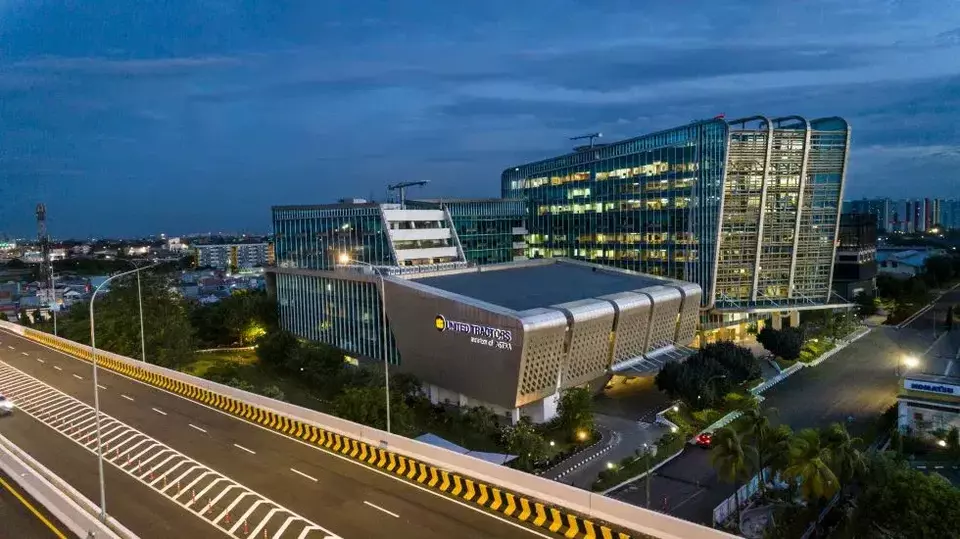
The aroma of freshly brewed coffee wafts faintly among the lush mint leaves and green hydroponic lettuce. In a busy corner of East Jakarta's Duren Sawit, a cup of coffee is not just something to start the day, but it has become a ritual that marks the beginning of hope. As urban spaces become more limited, Haryati and the resilient women of the D’Shafa Women Farmers Group (KWT D'Shafa) nurture their dreams, strand by strand, drop by drop. Their story is proof that building a nation does not always mean the construction of towers that are as tall as the sky, but it can begin with the warmth of a cup of coffee and the tenacity of a mother.
KWT D'Shafa originally started out as a forum for women to channel their passion for urban farming. With limited land, they grow vegetables and turn them into simple snacks. The crops also go into making the meals of their catering business. While the passion burns bright, the road ahead is steep. They have to grapple with limited business management knowledge, manual recording of harvests and sales, and an undeveloped marketing strategy pose real challenges.
Their monthly turnover, while substantial, is far from sufficient to finance one household. These women farmers have both the product and the will, but they lack the means to reach a wider market. This is where fate brings together grassroots enthusiasm and the vision of an industrial giant.
The meeting was no coincidence, but part of a deeper business philosophy. United Tractors (UT) -- a name synonymous with the roar of construction machinery and a trillion-dollar scale of operations -- saw something valuable within this small community. Through its social responsibility pillar in economic empowerment, United Tractors for Generating Opportunities and Wealth (UTGROWTH), the company came not as a fleeting donor, but as a strategic partner. Through specially designed programs like the United Tractors for Business Assistant (UT BUAS), the company addressed the core issues faced by KWT D'Shafa.
“In the past, we were enthusiastic about farming, but we didn’t know how to sell our harvests. We manually recorded every transaction in a regular book, and sometimes we forgot to take note [of any sale]. Sometimes we even lost [the book],” Haryati, who heads D'Shafa women farmers group, said.
"The mentoring from UT was like opening a door that had been closed. We were not only taught how to run a business, but also given the confidence that us, the women here, could stand up on our own," she said.
Management training, assistance in building a digital recording system, and workshops on effective marketing communications became the mainstays of the program. The D'Shafa women did not only learn about plant nutrition, but also about profit margins, market segmentation, and the power of a brand. This was the process of transforming from a mere farmer group into a competitive small business. This empowerment was about providing a fishing rod, not a fish; about lighting a fire, not just providing warmth.
So, why does a company with five giant business pillars -- construction machinery, mining contracting, mining, construction industry, energy -- place such a high value on a cup of coffee and a group of women in Duren Sawit?
The answer lies in a new paradigm of growth. For UT, the true wheels of industry are driven not only by diesel engines and coal, but by the stability and well-being of the communities in which they operate. This is the essence of the company's commitment to environmental, social, and governance (ESG) principles and its 2030 sustainability aspirations.
The story of KWT D'Shafa is a concrete manifestation of the social pillar within this ESG framework. By empowering women, UT has contributed to Indonesia's sustainable development goals (SDGs), namely SDG 5 (Gender Equality) and SDG 10 (Reduced Inequalities). This is a long-term investment. When a mother is economically empowered, she not only elevates herself but also improves the quality of nutrition, education, and health of her family. Communities become more resilient, creating a stable social environment that ultimately benefits the business climate. The wheels of industrial giants require a solid foundation to turn, and that foundation is a prosperous community.
| UNITED TRACTORS CSR PILLARS | MAIN FOCUS | RELEVANCE WITH NATIONAL DEVELOPMENT |
| UTFUTURE (Education) | Scholarship, facility renovations, and development of educational institutions. | Nurture a competent and competitive younger generation for the country's future. |
| UTCARE (Health) | Improve healthcare access for mothers, children, and the general public. | Create a healthy and productive human capital to drive development. |
| UTGROWTH (Economy) | Support and mentorship for micro, small and medium enterprises (MSMEs) to create economic self-sufficiency. | Drive local economy and narrow the income gap. |
| UTREES (Environment) | Conservation, reforestation, and programs that aim to slash carbon emissions. | Safeguard the planet, while ensuring a sustainable and environmentally friendly development. |
| UTACTION (Disaster management) | Disaster response and mitigation to help the affected people. | Build community resilience to disasters and speed up post-disaster recovery. |
The impact of this philosophy is measurable and tangible. UT's community empowerment programs have reached hundreds of thousands of people across the archipelago, creating a positive domino effect. The story of KWT D’Shafa is not an anomaly, but reflects a much bigger strategy.
On the slopes of Mount Arjuno, the Kampung UniTy program transforms ecotourism potential into a new economic source for residents. In Batu, East Java, the construction of a communal sheep farming pen has helped communities optimize unused land into productive assets. Each of these programs, no matter how small, is a thread woven into the larger fabric of national development. This is the embodiment of true "nation-building", measured not just by how much a company makes, but by the number of the lives that they have helped.
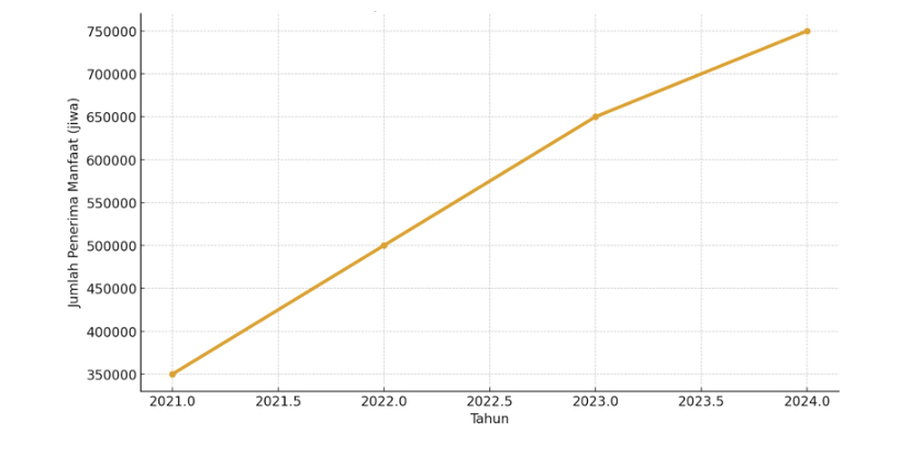
The graph above shows the cumulative increase in the number of beneficiaries of UT's community programs, demonstrating their long-term commitment and growing impact year after year.
However, this narrative doesn't stop at the beneficiary figures alone. It is intertwined with a fundamental transformation underway at the heart of UT. Amidst global dynamics demanding an energy transition, UT is consciously and strategically diversifying its business significantly, shifting from reliance on coal to new, more sustainable pillars: strategic minerals (nickel and gold), and renewable energy through significant investment in mini hydropower plants. This is where the story of KWT D'Shafa deeply resonates.
Community empowerment is not merely philanthropy separate from core business strategy, but an integral part of risk management and long-term value creation. Billions of dollars in green energy and mineral industrial processing require a "social license" to operate, which cannot be bought but must be built through trust. By sowing the seeds of economic independence at the grassroots level, UT is building strong social capital. They are laying a fertile ground for their future business pillars, ensuring that their energy transition and mineral diversification can thrive on a foundation of resilient, trusting communities who directly benefit from the company's presence.
Ultimately, the story returns to the cup of coffee in Haryati's hand. The coffee now tastes different. There's confidence in every sip, a richer aroma of self-sufficiency. The story of KWT D'Shafa teaches us a valuable lesson: that a caring "heart" can reside within a giant corporate. It demonstrates that empowering a mother in a narrow urban alley is, in essence, tightening one of the most fundamental nuts in the wheel of a giant industry.
Because when a mother is empowered, her family prospers, her community is strong, and only then can the wheel turn fast, steadily, and sustainably to truly build the nation. Not just constructing buildings, but building lives.
--
Yesrun Eka Setyobudi is pursuing his bachelor's degree in History Education at Jember University.
Tags: Keywords:Related Articles

United Tractors Declares Rp 5.92 Trillion Dividend, Names New Leadership
United Tractors approved Rp 5.92 trillion in dividends after posting Rp 14.8 trillion net profit and naming new executives.The Latest

Dear Mr. President, Don’t Skip ASEAN Summits
Despite calls for Prabowo to stay home, the Indonesian leader still needs to attend ASEAN summits.
PLN Rushes Coal Supplies After Power Outages Hit Java
PLN is rushing to secure coal supplies after shortages triggered rolling blackouts across Java, disrupting businesses and daily life.
Japan-Backed ADB Invests in Indonesia’s Human Capital
As many as 399 Indonesian awardees have joined the ADB-Japan Scholarship Program from 1988 to 2024.
Indonesian Stocks Rise Despite Foreign Outflows as MSCI Review Looms
Indonesia's JCI rose 2.8% as easing geopolitical tensions offset foreign outflows, MSCI concerns and rupiah pressures.
World Cup 2026: Paraguay Holds Off Turkey With 10 Men to Keep Knockout Hopes Alive
Matias Galarza scored after 65 seconds as 10-man Paraguay beat Turkey 1-0, eliminating the Turks and securing first place for the US.Most Popular