



Education as the Engine of Indonesia’s Energy and Technology Transformation
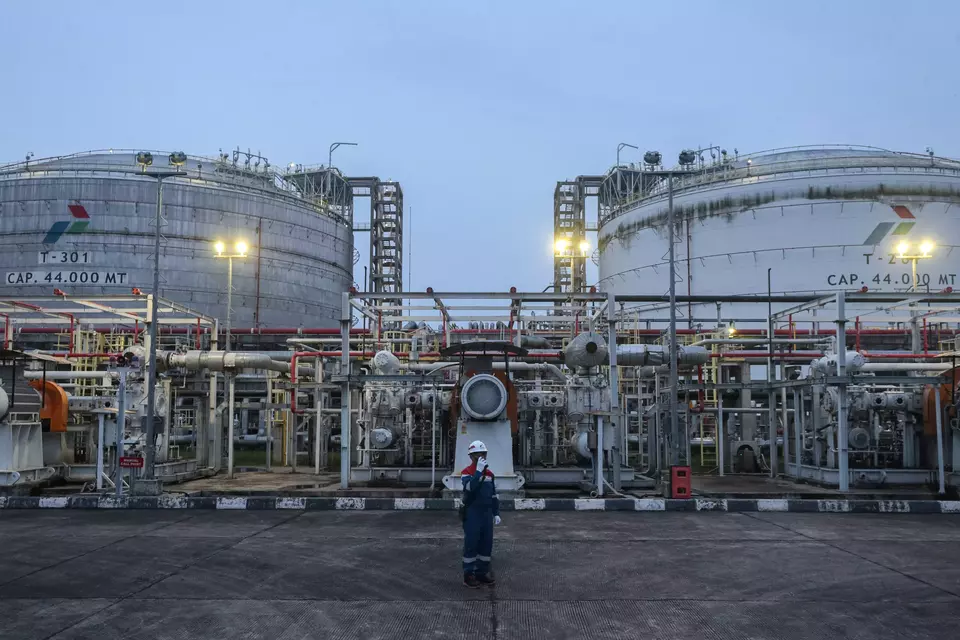
In 2026, the most important constraint on technological progress is not software or computing and data, but rather watts. As the artificial intelligence era begins to grow exponentially, the demand for power in software applications, AI models, and data centers becomes a bottleneck for all advancing nations.
China, the United States, and Europe have abundant or are close to reaching their grid ceilings, while Indonesia is a sleeping giant. It sits under the radar and is not frequently understood by investors at large. It is a nation with tremendous opportunity, and one of its biggest problems is infrastructure capacity, such as an underdeveloped power grid.
Indonesia has the greatest untapped potential out of the Southeast Asian countries, and below are the macro reasons why this is the next biggest trend: Indonesia's current energy is dependent on coal and LNG gas imports. These two sources currently support Indonesia's demanding economy, providing energy for domestic needs, industrial manufacturing, mining, and growing AI and data centers.
In fact, Indonesia is the world's largest thermal coal exporter, providing 50% of the global seaborne supply. As a result of its abundance, coal is a major sector in Indonesia's energy. However, coal is a non-renewable source of energy and is often tied to climate change.
This is where Indonesia's greatest opportunity for advancement lies. The future of energy requires two things: clean and renewable sources that provide constant and reliable power.
Although Indonesia has access to renewable energy sources like solar and wind, it falls short of the latter requirement due to its tropical weather and annual monsoon seasons. During monsoon seasons, Indonesia’s solar panels would dramatically drop in efficiency while being far more difficult to maintain in the rain and tropical humidity.
On the other hand, Indonesia is located around the equator, a region where the wind is notably calm, unsuitable to support giant wind turbines. This goes into the second restriction that is restricting Indonesia's power grid: consistent and reliable energy.
The data centers that Hyperscalers like Meta, AWS, Google, and Microsoft run depend on constant power.
Although LNG gas and coal would suffice the short-term demands, these sources are highly inefficient while lacking a practical way to scale for the future. There is one potential pathway for Indonesia that meets the future’s energy requirements: nuclear power.
Nuclear energy is a source that is low-carbon emitting and runs 24/7, but there is a reason why not every country has a nuclear power plant. Traditional large-scale nuclear plants take 10-15 years, requiring investments of $10 billion or more per site.
In recent events of the Iran War, another requirement was added to the demands of the future of energy: sovereign energy. With the recent closing of the Strait of Hormuz, many nations across the world faced import supply challenges.
As modeled by Goldman, 20 million barrels of daily oil flow were blocked, 16 million with no alternative route, and Brent crude oil surging to $126. As characterized by the International Energy Agency, the closing of the Strait of Hormuz created the largest supply disruption in the history of the global oil market.
Any nation whose energy supply depended on Gulf shipping routes just learned that a military escalation can threaten its entire power grid.
In Indonesia specifically, importing $36 billion in fossil fuels annually was an urgent matter, accelerating the search for nuclear power as its entire national energy source was threatened. This is why a sovereign source of energy is imperative in the 21st century.
The development of a sovereign energy source would create national energy security, shielding Indonesia from the global events that heavily harm nations that are dependent on neighboring countries.
This urgency is what catalyzed President Prabowo Subianto’s pivot to nuclear power. In September 2025, President Prabowo signed a new National Energy Policy integrating nuclear energy into Indonesia’s grid for the first time. He aims for nuclear power to reach 0.4% by 2032 and 12.1% of Indonesian power by 2060.
In addition, the current plan of 500 MW of nuclear capacity has been expedited from the previous target of 2039 to 2032-2034. President Prabowo has explicitly framed energy independence as a major priority for Indonesia. But how can Indonesia accelerate this timeline further?
Two factors allow a nation to specialize in a new sector: education and resource facilities. Indonesians must think like other nations, like China, and invest in their citizens' education. China advocated for studies abroad, sending students to study engineering at world-class institutions, and building a population striving for technological advancements.
All global leading nations are heavily invested in education, for it is the best way to advance a country. Not only that, but Indonesia must also invest in an ecosystem for the students studying abroad to return to.
Indonesia is already focusing on this: the Indonesian Nuclear Technology Polytechnic, formerly STTN-BATAN, has been training nuclear technicians and is now expanding into applied master's and doctoral programs, and Bandung Institute of Technology offers a Master of Nuclear Science and Engineering.
Above all, Indonesia is a rapidly developing country with a $1.55 trillion GDP, which by 2040 is projected to be $4 -5 trillion with a massive population of 280 million people. It is a nation rich in resources and tourism having abundant fertile agricultural land.
However, as the AI era continues and energy demands increase, Indonesia must have a clean, efficient, and sovereign power infrastructure.
Having this stable infrastructure will give them leverage over neighboring Southeast Asian countries in deals with Hyperscalers, building business relationships worldwide while promoting Indonesia as a growing technological hub.
Furthermore, as Indonesia climbs global rankings in GDP while advocating for studies abroad, Indonesians will be inspired to participate in their booming economy. Ultimately, awareness and understanding of the potential opportunity of a prosperous nation like Indonesia is the gateway to national improvement.
Indonesia needs to be self-reliant in technological advancements by producing homegrown top-tier talent, and universities play a major role.
---
Barron Riady is a senior student at Harvard-Westlake Middle School in Los Angeles, California. The views expressed in this article are those of the author.
Related Articles

Education as the Engine of Indonesia’s Energy and Technology Transformation
The future of energy requires two things: clean and renewable sources that provide constant and reliable power.
Opportunities for Green Hydrogen in the Present Energy Crisis
In many emerging markets, energy imports represent a significant share of total trade deficits, exposing economies to external shocks.
Indonesia Spends Rp 120 Trillion a Year on LPG Imports, Pushes Electric Stove Program
The initiative is also intended to reduce the fiscal burden of subsidizing 3-kilogram LPG cylinders widely used by low-income households.
Kencana Energi Wins $116 Million Hydropower Project From PLN
Kencana Energi secured a $116 million hydropower project that will nearly double its installed generation capacity.
Barito Renewables Posts $53 Million Q1 Profit on Strong Geothermal Output
New projects are expected to lift the company’s total geothermal capacity to more than 1,000 MW by the end of 2026.
Russia Eyes Bigger Role in Indonesia’s Energy Future
Russia signals readiness to support Indonesia’s energy security, offering oil, gas and nuclear cooperation.
Indonesia Less Dependent on Mid-East Oil Than Other Asian Nations: Minister
Indonesia’s limited reliance on Hormuz oil routes helps shield the economy from global energy shocks, Airlangga says.
Toyota Fortuner, Mitsubishi Pajero Used in Indonesia’s 50% Biodiesel Trial
Indonesia is testing B50 biodiesel in SUVs, trucks, and buses ahead of a planned June mandate.
Indonesia Expands Waste-to-Power Push With Five New Plants
The strategic projects are expected to process more than 7,000 tons of waste per day.
Indonesia Set to Begin Russian Oil Imports This Month, Minister Bahlil Says
Indonesia plans to start importing Russian crude oil this month to diversify supply and strengthen energy security amid global risks.The Latest

Dear Mr. President, Don’t Skip ASEAN Summits
Despite calls for Prabowo to stay home, the Indonesian leader still needs to attend ASEAN summits.
PLN Rushes Coal Supplies After Power Outages Hit Java
PLN is rushing to secure coal supplies after shortages triggered rolling blackouts across Java, disrupting businesses and daily life.
Japan-Backed ADB Invests in Indonesia’s Human Capital
As many as 399 Indonesian awardees have joined the ADB-Japan Scholarship Program from 1988 to 2024.
Indonesian Stocks Rise Despite Foreign Outflows as MSCI Review Looms
Indonesia's JCI rose 2.8% as easing geopolitical tensions offset foreign outflows, MSCI concerns and rupiah pressures.
