Commentary: Yuan's SDR Inclusion Impacts Global Financial Order and China's Capital Markets
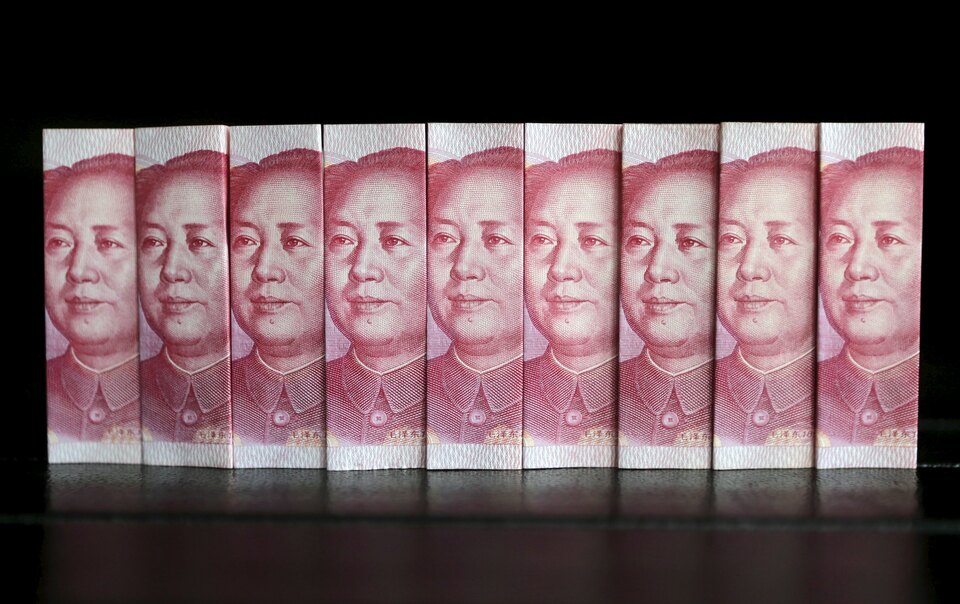
In the beginning, it was a tourists’ currency. Then, traders and bankers began using it. Now, the yuan, or renminbi, is about to take another leap forward, into the realms of the world’s central banks.
On Nov. 30, the International Monetary Fund announced that the yuan would be included in its basket of so-called Special Drawing Rights, thus putting the Chinese currency on par with main reserve currencies such as the US dollar and the euro.
The move represents a major step along the yuan's path from a national currency to an international one. It also presages more of the financial and capital-account liberalization that forms part of China’s overall economic reform efforts.
Just over a decade ago, yuan usage was largely confined to mainland China. Hardly any of China’s trade with the rest of the world was settled in yuan, and the market for yuan-denominated bonds was non-existent.
By now, more than a quarter of China’s trade is settled in yuan. Various cross-border schemes allow foreign investors to buy stocks and bonds in mainland China. A large pool of offshore yuan that is freely convertible for trade payment and investment also exists – Hong Kong being the largest offshore center with some 1 trillion yuan in funding.
The SDR inclusion — long an aspiration for policy makers in Beijing — sends several important messages.
It underlines just how far the Chinese currency has come, and vindicates Beijing’s financial-market reforms to date. The yuan may not yet be freely convertible, but the developments so far reinforce the view that the yuan is on track for full convertibility within the next few years.
At the same time, the SDR decision serves as a “sign” of long-term quality assurance: it underlines that the currency is liquid and stable as a store of value. Also, it will also give greater confidence to companies and institutions around the world to settle trade in yuan and invest in yuan-denominated assets.
In other words, SDR inclusion is a big psychological confidence-booster.
In terms of financial flows, the inclusion in the SDR basket will prompt some central banks to adjust their holdings of the Chinese currency. The yuan has been assigned a 10.92 percent weighting in the SDR basket, higher than that of the pound and the yen.
Central banks and reserve managers who hold assets denominated in SDRs, or who match their reserves to the SDR, will need to adjust their yuan holdings accordingly. According to a survey of central banks carried out earlier in the year, the yuan will make up an estimated 2.9 percent of foreign exchange reserves by the end of this year — and will account for 10 percent of world reserves by 2025.
Finally, and perhaps most importantly, the SDR inclusion presages still more financial and capital account liberalization.
In the run-up to the IMF’s twice-a-decade review of the SDR basket composition, policy makers in Beijing had stepped up financial reforms in a bid to attain inclusion.
This July, the People’s Bank of China made it easier for other central banks, sovereign wealth funds and international financial institutions such as the World Bank to invest in China’s inter-bank bond market, where the vast majority of China’s government and corporate bonds are traded.
In August, the authorities gave market forces a greater role in how the central parity rate of the yuan against the US dollar’s daily trading band is determined.
And last month, China increased the quotas that limit how much South Korean and Singaporean institutional investors can invest through the Renminbi Qualified Foreign Institutional Investor scheme, one of the cross-border investment channels into mainland China’s capital markets. It also designated Malaysia as a new RQFII participant.
The SDR inclusion is not the end of this reform story. On the contrary, it is likely to prompt more moves by China to progressively open its doors to two-way capital flows.
A Shenzhen-Hong Kong equivalent of the Shanghai-Hong Kong Stock Connect, which allows investors from both sides direct access to each other’s market, is in the works.
So is a scheme that will start allowing retail investors in mainland China to invest overseas, and could unleash billions of yuan in Chinese savings onto global stock, bond and real estate markets.
The quotas that currently cap the amount of foreign capital that can flow into China via an array of cross-border investment channels could be raised further, and could ultimately even be abolished. And the governance and administration of these various channels could be harmonized in a bid to make it easier for foreigners to invest in mainland China.
As China seeks to rebalance its economy towards more consumption, services and higher-value manufacturing, it needs a more open capital account: liberalization will help support economic growth, improve the allocation of capital, and help bring down borrowing costs.
The SDR inclusion’s importance is far more than just symbolic. The global financial system needs to get ready for a fundamental change — and for the imminent arrival of a new player in the form of a rapidly internationalizing yuan.
Peter Wong is deputy chairman and chief executive of the Hongkong and Shanghai Banking Corporation (HSBC).
Tags: Keywords:Related Articles

JCI Pauses Rally, Edges Down as Investors Await Clarity on US–Iran Talks
JCI slips 0.03% to 7,621 as profit-taking and US–Iran uncertainty offset strong regional gains and easing oil price concerns.
IMF Praise Helps JCI Finish Higher Amid Volatility and Global Caution
IMF praise lifted the JCI to close in the green, even as volatility persisted and investors stayed wary ahead of global policy cues.
IMF Raises Indonesia’s 2026 Growth Forecast to 5.1%
IMF lifts Indonesia’s 2026 growth forecast to 5.1%, citing resilient domestic demand and investment despite lingering global trade risks.
IMF Lifts Global Growth Outlook to 3.3% on Economic Resilience
The IMF raised its global growth forecast to 3.3%, citing strong AI investment and resilience despite trade tensions.The Latest

Dear Mr. President, Don’t Skip ASEAN Summits
Despite calls for Prabowo to stay home, the Indonesian leader still needs to attend ASEAN summits.
PLN Rushes Coal Supplies After Power Outages Hit Java
PLN is rushing to secure coal supplies after shortages triggered rolling blackouts across Java, disrupting businesses and daily life.
Japan-Backed ADB Invests in Indonesia’s Human Capital
As many as 399 Indonesian awardees have joined the ADB-Japan Scholarship Program from 1988 to 2024.
Indonesian Stocks Rise Despite Foreign Outflows as MSCI Review Looms
Indonesia's JCI rose 2.8% as easing geopolitical tensions offset foreign outflows, MSCI concerns and rupiah pressures.
World Cup 2026: Paraguay Holds Off Turkey With 10 Men to Keep Knockout Hopes Alive
Matias Galarza scored after 65 seconds as 10-man Paraguay beat Turkey 1-0, eliminating the Turks and securing first place for the US.Most Popular