Why the World Cannot Leave US-Iran Peace to Chance

The fragile US-Iran ceasefire is running out of time, and the prospect of a definitive peace agreement remains uncertain. Talks are ongoing but structurally strained. Recent incidents have included the confiscation of ships, blockades, and escalating tensions in the Strait of Hormuz. Washington and Tehran are negotiating, but each side is also attempting to gain leverage through pressure.
The negotiations have reached a standstill because of deep mutual distrust. Iran perceives US proposals as predetermined: talks conducted under duress, ongoing sanctions, and implicit threats of war if negotiations fail. Meanwhile, Iran seeks sanctions relief and greater control over the Strait of Hormuz.
Behind the diplomatic signaling lies a major divide that is not easily reconcilable. The United States wants Iran to agree to stop enriching uranium. It also seeks Iran’s commitment to surrender uranium stockpiles, curtail missile development, and reduce funding for regional proxies.
Iran’s position centers on sovereignty and economic survival. It emphasizes the need for sanctions relief, control over the Strait of Hormuz, and time-bound restrictions on its nuclear program.
While technical trade-offs are feasible, bridging this divide would require a level of confidence and verification that neither side appears willing to embrace.
Killing Pragmatists, Empowering Hardliners
Iran’s negotiating posture is shaped by internal power struggles and competing geopolitical visions. External forces also play a role. With the passing of Supreme Leader Ali Khamenei, authority has been divided among rival ruling factions.
Until he was killed in Israel’s decapitation campaign, Ali Larijani was regarded as a voice of stability in Iran. Larijani, a pragmatic conservative respected across the political spectrum, served as a bridge between hardliners and policymakers. He was skilled in nuclear diplomacy and institutional collaboration, often transforming intractable positions into negotiable proposals. The regime benefited from his pragmatic flexibility.

Larijani’s death is a major blow to pragmatic leadership. It also deprives the United States of one of the few figures capable of facilitating a US-Iran peace agreement.
Mojtaba Khamenei has assumed power following the assassination of his father, Ali Khamenei. Mojtaba, an ally of the Islamic Revolutionary Guard Corps (IRGC), favors a security-first approach grounded in ideological cohesion. He appears unwilling to negotiate, making his position more rigid and consolidated.
Without leaders such as Larijani, the prospects for dialogue have diminished. The balance of power now leans toward a harsher stance. This reduces the likelihood of short-term accommodation and increases the risk of strategic confrontation.
Trump’s Negotiating Style: Coercion, Visibility, and Risk
Trump’s approach combines coercion and visibility, including military pressure, public deal-making, and narrative control. This strategy can be effective in conventional business transactions, where leverage may quickly produce an agreement.
However, this method is unstable in a complex geopolitical context. High visibility reduces flexibility, while coercion breeds resistance.
Trump’s reliance on instant messaging through his preferred social media platform, Truth Social, has made an already turbulent process even more unstable. Trump regularly declared that a deal was imminent, yet Iranian officials later rejected those claims. This has undermined US credibility and increased strategic uncertainty.

Iranian negotiators cannot appear to concede publicly, especially under hardline scrutiny. This lack of open communication makes it difficult to achieve a durable peace agreement.
Domestic Fallout of a Foreign War
Rising gas prices have fueled inflation and public anger. Trump’s approval rating has fallen below 40 percent, as many Americans fear the war’s economic consequences.
At the same time, polling data suggest that Democrats could regain control of Congress as voters grow increasingly anxious about the economy and inflation.
Energy costs matter. The war has also increased pressure on the cost of living, with fuel prices climbing by double-digit percentages since the conflict began, highlighting the war’s immediate domestic consequences.
The analysis suggests a widening gap between policy goals and public support. Low approval ratings are not merely part of the normal ebb and flow of politics; they also reflect perceptions of economic mismanagement and political overreach.
Trump has faced twofold pressure: to secure a diplomatic victory and to reduce the war’s political costs for the Republican Party. The US president stated that it was “highly unlikely” he would extend the ceasefire if no deal were reached by the deadline. However, only hours before the deadline expired, he announced a ceasefire extension with Iran until its leaders “come up with a unified proposal.”
A Regional War with Global Price Tags
Failure of the peace talks would have repercussions far beyond the Middle East. The Strait of Hormuz is vital to global energy flows. Disruptions in the Strait can trigger fuel price volatility and broader economic instability.

The IMF warned this week that a protracted conflict could push the global economy to its weakest point since the COVID-19 pandemic—or even into recession. The economic consequences are already visible in turbulent markets, currency volatility, and declining investor confidence.
The US-Iran feud is now a global economic factor, not merely a regional issue.
Beyond Pakistan: Time for Global Diplomacy to Lead
The potential failure of a US-Iran peace agreement and its severe impact on the global economy should serve as a wake-up call for the international community to stop relying on Pakistan as the sole intermediary. Major actors, including European nations, China, and Canada, as well as developing middle powers such as Indonesia, must do more than merely observe.
A well-designed diplomatic initiative is now a necessity, preferably under the auspices of the United Nations or another recognized international organization.
Without broader international engagement, US-Iran negotiations may remain mired in coercion rather than consensus, and in escalation rather than resolution. The world will pay a heavy price for inaction.
---
Didin Nasirudin is a doctoral candidate in Political Communications and Diplomacy at Sahid University, with a research focus on US politics. The views expressed in this article are those of the author.
Related Articles

US Lifts Blockade of Iran as Oil Tankers Begin Passing Through Strait of Hormuz
Major shipowners began moving vessels through the strait after the agreement was signed, according to Lloyd’s List Intelligence.
Trump Calls Off Latest Threats to Strike Iran, Citing Progress in Negotiations
Trump had threatened further escalation earlier Thursday, posting on social media that the US would hit Iran “VERY HARD TONIGHT”.
A War Neither Side Can Control: The Political Costs for Trump and Netanyahu
The US retains military superiority over Iran, but the political trajectory of the war is increasingly slipping beyond its control.
Hegseth Reassures Pacific Allies While Softening China Rhetoric
Hegseth reassured Indo-Pacific allies of U.S. commitment while adopting a more measured tone toward China.
US and Iranian Negotiators Reach Tentative Deal to Extend Ceasefire
Washington and Tehran have repeatedly accused each other of violating the seven-week ceasefire and have traded strikes throughout the week.
Trump Withdraws $10B Suit Against Internal Revenue Service
The decision is part of a deal that would create a $1.7 billion fund to pay allies of the president.
Drone Strike Sparks a Fire Near UAE's Nuclear Power Plant
Iran has been increasingly threatening the UAE over recent days as the country hosted Israeli Iron Dome missile defenses and troops.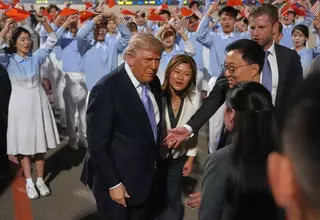
Trump-Xi Meeting Opens in Beijing With Low Expectations on Trade, Security
Trump met Xi in Beijing as both sides opened talks, with little expectation of breakthroughs on Iran, Taiwan and trade.
Israel Deploys Iron Dome Batteries to UAE: Envoy
The United Arab Emirates diplomatically recognized Israel in 2020. That drew criticism from Iran, long Israel's main regional enemy.
Kuwait Accuses Iran's Revolutionary Guard of Attacking Its Island
Bubiyan Island is home to Mubarak Al Kabeer Port, which is under construction as part of China’s “Belt and Road” initiative.The Latest

Dear Mr. President, Don’t Skip ASEAN Summits
Despite calls for Prabowo to stay home, the Indonesian leader still needs to attend ASEAN summits.
PLN Rushes Coal Supplies After Power Outages Hit Java
PLN is rushing to secure coal supplies after shortages triggered rolling blackouts across Java, disrupting businesses and daily life.
Japan-Backed ADB Invests in Indonesia’s Human Capital
As many as 399 Indonesian awardees have joined the ADB-Japan Scholarship Program from 1988 to 2024.
Indonesian Stocks Rise Despite Foreign Outflows as MSCI Review Looms
Indonesia's JCI rose 2.8% as easing geopolitical tensions offset foreign outflows, MSCI concerns and rupiah pressures.
World Cup 2026: Paraguay Holds Off Turkey With 10 Men to Keep Knockout Hopes Alive
Matias Galarza scored after 65 seconds as 10-man Paraguay beat Turkey 1-0, eliminating the Turks and securing first place for the US.Most Popular