



Govt Partners with Tanoto Foundation, Gates Foundation, UNICEF to Boost Literacy and Numeracy
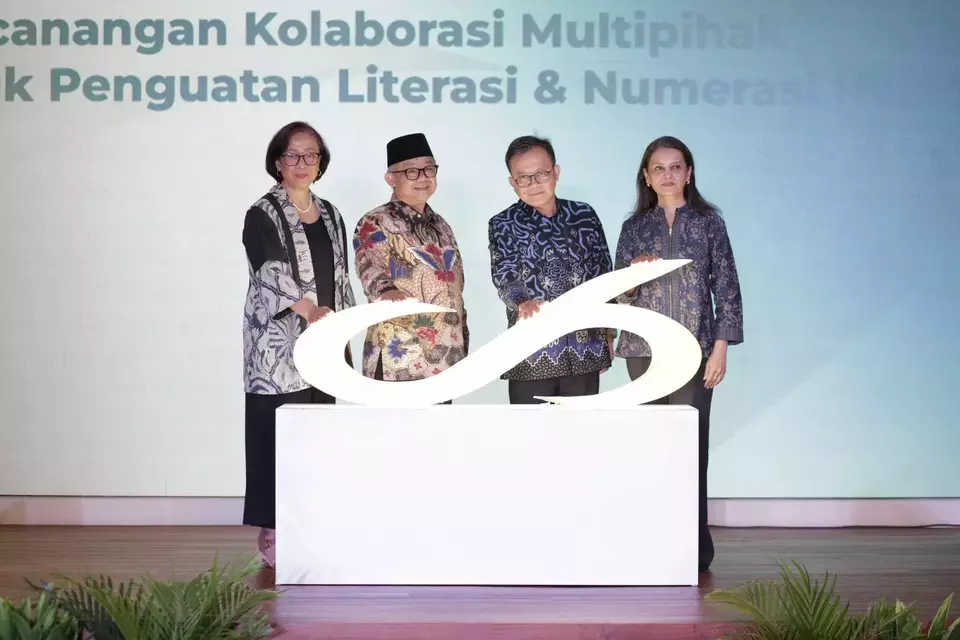
Jakarta. The Indonesian government has partnered with Tanoto Foundation, the Gates Foundation, and UNICEF, among others, to boost literacy and numeracy in the country.
The Primary and Secondary Education Ministry has initiated the multistakeholder collaboration, also with six district partners across four provinces. These include Medan and Pematang Siantar in North Sumatra, Batang Hari in Jambi, Tegal in Central Java, as well as Ende and Sikka in East Nusa Tenggara.
The partnership was in response to the Programme for International Student Assessment (PISA) results. Most Indonesian students continue to perform below the OECD average in both reading literacy and mathematics. Students scored above the average in reading, while just 18% did so in mathematics. These figures highlight the urgent need for early intervention.
To this end, the partnership aims to deliver measurable, high-impact innovations through training and mentoring across 500 public primary schools, supporting 1,500 early-grade teachers and principals, and benefiting at least 45,000 students by 2029. In the long term, the program is expected to expand to reach students nationwide.
Primary and Secondary Education Minister Abdul Mu'ti said that improving students’ foundational literacy and numeracy skills remains a key challenge.
“This collaboration is crucial, with a focus on primary school students, especially in the early grades. Mastering these foundational skills is essential for learning across all subjects,” he said.
He outlined three main priorities of the program.
“First, building competencies through learning tailored not only to students’ ages but also to appropriate pedagogical approaches. Second, fostering a reading habit that complements literacy skills. Third, implementing an effective numeracy approach that develops logical thinking from the start, rather than focusing solely on calculation or complex formulas.”
The government hopes that the program can witness significant improvements among kids in Grades 1-3.
The partnership is built around three key pillars, including strengthening classroom practice through structured pedagogy, using diagnostic assessment data to improve learning tailored to students’ needs, and aligning national and local policies to create a more coherent and sustainable education ecosystem.
Margaretha Ari Widowati, Head of Learning Environment Tanoto Foundation, emphasized the central role of teachers in improving learning outcomes.
“Through this collaboration, we aim to support teachers in strengthening classroom practice so that every child can grasp foundational literacy and numeracy concepts. By leveraging student assessment data, teachers can accurately map student needs and tailor their teaching strategies to meet the requirements of each learner,” said Ari.
Tanoto Foundation, an independent philanthropic organisation established in 1981 by Sukanto Tanoto and Tinah Bingei Tanoto, has long worked alongside teachers, school leaders, and local governments to improve education quality.
“Our experience in the field shows that when teachers are equipped with effective teaching practices, supported by meaningful data and strong institutional systems, improvements in learning outcomes can follow,” She added.
Benjamin Piper, Director of Global Education at the Gates Foundation, said: “Strong reading and math foundations are essential for every child to keep learning and reach their potential. Results from India show what’s possible: improving classroom practice at scale, strengthening learning materials, and using clear student assessment data has led to substantial gains in reading and math. As part of the NIPUN Bharat mission, this work combined technical inputs with strong political will and government commitment. This partnership will scale these approaches to unlock the potential of the next generation of learners in Indonesia.”
UNICEF Indonesia Representative Maniza Zaman said: “Realizing every child’s right to quality education is fundamental to achieving their full potential in life, and to supporting Indonesia’s Golden Generation 2045 ambition. This multi‑stakeholder collaboration reflects our shared commitment to this goal by strengthening children’s foundational skills such as literacy and numeracy. UNICEF is proud to bring to this partnership our global expertise, innovative approaches, and our strong local knowledge and presence in Indonesia. Together, we can support children to be better prepared to contribute to Indonesia’s long‑term aspirations.”
From National Policy to Local Action
The launch of the partnership was followed by two moderated discussion sessions that reinforced the program's relevance while highlighting implementation across levels, from national to regional.
The first session, titled From Evidence to Action: Strengthening Foundational Literacy and Numeracy at National Scale, brought Director of Primary Education Teachers, Directorate General of Teachers and Education Personnel, Rachmadi Widdiharto; Head of the Center for Education Standards and Policy, BKPDM, Irsyad Zamjani; Head of Learning Environment Tanoto Foundation, Margaretha Ari Widowati; and Education Specialist from UNICEF, Teresita Felipe.
This session discussed the importance of diagnostic assessment and structured pedagogical practices as efforts to implement a deep learning approach.
The second session, Literacy and Numeracy in Local Policy, featured mayors and district heads from six district partners, such as the Mayor of Medan, Rico Tri Putra Bayu Waas, the Mayor of Pematang Siantar, Wesly Silalahi, the Regent of Batang Hari, Muhammad Fadhil Arief, the Regent of Tegal, H Ischak Maulana Rohman, the Regent of Ende, Yosef Benediktus Badeoda, and the Regent of Sikka, Juventus Prima Yoris Kago.
The direct involvement of local government leaders in this forum underscores that the program is not merely a central initiative, but a joint effort between national and local governments to ensure all Grade 3 students achieve foundational reading and mathematics skills.
Supporting National Priorities
This partnership aligns with Indonesia’s broader national development agenda, including the Asta Cita priorities, particularly in strengthening human capital. It also reflects the direction set out in the National Medium Term Development Plan 2025 to 2029, which places emphasis on teacher quality, deeper learning, and the use of data as key drivers of education reform.
The initiative further reflects the Ministry’s commitment to broad-based participation in education, respectively Partisipasi Semesta (Universal Participation) untuk Pendidikan Bermutu bagi Semua (for Quality Education for All), bringing together government institutions, philanthropic organisations, and international development partners to ensure that all children, particularly those in underperforming schools, have access to quality learning.
Tags: Keywords:Related Articles

Tanoto Foundation, Ministries Release Storybook Encouraging Screen-Free Activities
A new children’s book campaign in Indonesia encourages healthier screen habits and more offline activities for young children.
Tanoto Foundation Opens 2026 Fellowship, Calling Young Leaders to Drive Education Transformation
Tanoto Foundation opens 2026 Fellowship, inviting young Indonesians to drive education reform through hands-on projects.
Govt Partners with Tanoto Foundation, Gates Foundation, UNICEF to Boost Literacy and Numeracy
The partnership aims to deliver measurable, high-impact innovations through training and mentoring across 500 public primary schools.
Tanoto Foundation Gives TELADAN Scholarship for 176 Students
These Tanoto scholars got selected from 9,283 applicants from the said universities through a multi-layered selection process.The Latest

Dear Mr. President, Don’t Skip ASEAN Summits
Despite calls for Prabowo to stay home, the Indonesian leader still needs to attend ASEAN summits.
PLN Rushes Coal Supplies After Power Outages Hit Java
PLN is rushing to secure coal supplies after shortages triggered rolling blackouts across Java, disrupting businesses and daily life.
Japan-Backed ADB Invests in Indonesia’s Human Capital
As many as 399 Indonesian awardees have joined the ADB-Japan Scholarship Program from 1988 to 2024.
Indonesian Stocks Rise Despite Foreign Outflows as MSCI Review Looms
Indonesia's JCI rose 2.8% as easing geopolitical tensions offset foreign outflows, MSCI concerns and rupiah pressures.
