Singapore’s EV Slowdown Sends Warning Signal to Indonesia’s EV Market
Jakarta. A cooling interest in electric vehicles (EVs) in Singapore is drawing attention across Southeast Asia, including Indonesia, where EV sales have grown aggressively, but ecosystem readiness remains under scrutiny.
A recent EY-Parthenon report titled Mobility Consumer Index (MCI) 2025 found that consumer interest in EV purchases in Singapore declined from 73 percent to 58 percent. While still above the global average of 43 percent, the drop signals a more cautious stance among buyers. Globally, 50 percent of respondents said they were considering returning to internal combustion engine vehicles, up significantly from the previous year.
According to the report, the shift reflects practical concerns rather than resistance to green technology. Around 56 percent of Singaporean respondents cited worries about public charger reliability and interoperability. Even with a relatively favorable charging ratio of 1:3, users remain sensitive to convenience and real-world usability.
Indonesia’s Rapid Growth Faces Infrastructure Questions
Indonesia, by contrast, is experiencing rapid EV adoption. Data from the Indonesian Automotive Industry Association (Gaikindo) show EV sales reached 103,931 units in 2025, more than double the previous year's figure.
However, charging infrastructure expansion has lagged behind sales growth. As of December 2025, Indonesia had 4,778 active public charging units across 3,093 locations, resulting in an estimated ratio of 1:21 — well below the recommended 1:10 benchmark. The gap raises concerns about long-term consumer confidence, especially during periods of peak mobility such as holiday travel.
Battery Replacement Costs and Resale Pressure
Beyond infrastructure, battery replacement costs remain a major consideration. As the most expensive component of an EV, uncertainty surrounding post-warranty battery expenses directly affects perceived ownership risk.
These concerns are increasingly reflected in Indonesia’s secondary market. On marketplaces such as OLX Indonesia, activity in the used electric car or “mobil listrik bekas” segment indicates that depreciation and resale value are becoming key decision drivers.
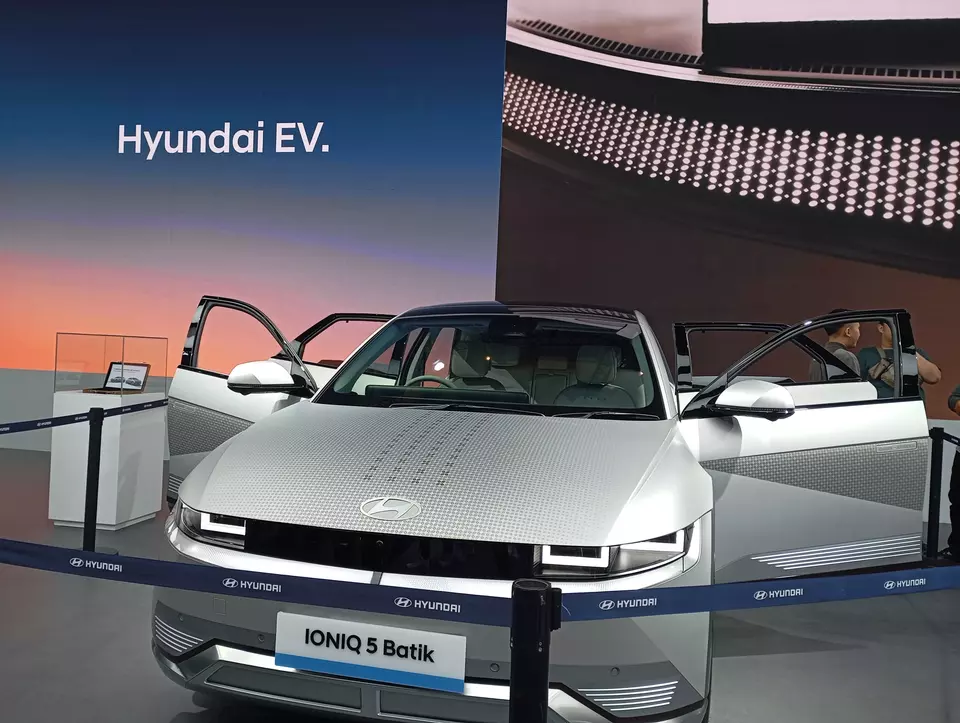
One prominent example is the Hyundai Ioniq 5. Initially launched in Indonesia in 2022 at prices ranging from Rp 718 million to Rp 829 million, units from the 2022–2023 production years are now widely listed between Rp 350 million and Rp 480 million. The price adjustment illustrates how evolving technology and uncertainty over long-term battery durability influence valuation in the used market.
Used Market as a Reflection of Consumer Reality
Industry observers argue that the used car segment often reflects consumer sentiment faster than the new car market, which can be buoyed by government incentives and promotional campaigns.
“The used car market tends to reveal consumer realities faster than the new car market. Technology may be developing rapidly, but consumer behavior will change if it feels reasonable. As long as there are obstacles or friction in usage, consumers will naturally choose what is more practical. This is clearly visible in the used car market,” said Co-CEO & Director of OLX Indonesia, CK Yap.
The development in Singapore serves as a reminder for Indonesia that EV adoption is not merely about accelerating sales volumes. Infrastructure reliability, interoperability, long-term ownership costs, and stable resale values will ultimately shape consumer trust.
As Indonesia pushes forward with electrification, the sustainability of the transition will depend not only on policy and incentives but also on whether the broader ecosystem can deliver practical, economic confidence to consumers.
Tags: Keywords:Related Articles

Indonesia’s Qurban Market Begins Pricing Ahead of Eid al-Adha 2026
Sellers open early sales channels as goat and cattle prices remain steady in the initial phase.
Singapore’s EV Slowdown Sends Warning Signal to Indonesia’s EV Market
The used car market tends to reveal consumer realities faster than the new car market.
Honda Civic Hybrid Selected Best Car by Edmunds, Hyundai Wins Two SUV Awards
With its available hybrid powertrain, the Civic achieves up to an EPA-estimated 49 miles per gallon (mpg) in combined city/highway driving.The Latest

Dear Mr. President, Don’t Skip ASEAN Summits
Despite calls for Prabowo to stay home, the Indonesian leader still needs to attend ASEAN summits.
PLN Rushes Coal Supplies After Power Outages Hit Java
PLN is rushing to secure coal supplies after shortages triggered rolling blackouts across Java, disrupting businesses and daily life.
Japan-Backed ADB Invests in Indonesia’s Human Capital
As many as 399 Indonesian awardees have joined the ADB-Japan Scholarship Program from 1988 to 2024.
Indonesian Stocks Rise Despite Foreign Outflows as MSCI Review Looms
Indonesia's JCI rose 2.8% as easing geopolitical tensions offset foreign outflows, MSCI concerns and rupiah pressures.
World Cup 2026: Paraguay Holds Off Turkey With 10 Men to Keep Knockout Hopes Alive
Matias Galarza scored after 65 seconds as 10-man Paraguay beat Turkey 1-0, eliminating the Turks and securing first place for the US.Most Popular