BI Unveils 'Pinisi' to Drive Financing, Back 5.4% Growth Goal

Jakarta. Bank Indonesia (BI) has launched its macroprudential program called National Financial Intermediation Acceleration (Pinisi), aiming to unlock financing for priority programs and drive the real sector as global uncertainty intensifies.
BI Governor Perry Warjiyo said the central bank and the government are aligning policies to sustain stronger, more inclusive, and sustainable growth, with Pinisi positioned as a key execution platform.
“Pinisi will serve as a strategic platform to strengthen communication and coordination, build optimism, and resolve bottlenecks in financing the economy,” Perry said during the program’s kickoff at BI headquarters in Jakarta on Monday.
He warned that the global economy is not only slowing but facing prolonged uncertainty, driven by escalating geopolitical tensions involving the United States, Israel, and Iran, as well as the persistence of high interest rates.
These conditions, he said, have triggered capital outflows from emerging markets, including Indonesia, adding pressure on external resilience.
“Capital outflows and external pressures require us to strengthen our economic resilience. We must enhance synergy and coordination to navigate these unfavorable global conditions,” Perry said.
The government is targeting economic growth of 5.4% by the end of 2026, a goal that hinges on tighter coordination between fiscal and monetary policy.
On the monetary side, BI is reinforcing its policy mix to maintain stability while supporting growth.
“Macroprudential policy will ensure financing intermediation for the economy, while payment system policies will accelerate digital financial transformation as a future growth engine,” he added.
Three Key Focus Areas
Perry outlined three core priorities under the Pinisi framework.
First, strengthening collaboration among stakeholders, including the government, BI, the Financial Services Authority (OJK), sovereign wealth fund Danantara, banks, investors, and businesses.
“Let us move together toward our shared goal of driving economic growth for public welfare,” he said.
Second, accelerating the completion of priority government programs that are already in the pipeline, which are expected to lift growth momentum.
“We must work together to find the best solutions for economic progress,” Perry said.
Third, ensuring that coordination under Pinisi translates into concrete outcomes, including agreements, financing commitments, and project execution.
“Let us strengthen optimism, commitment, and synergy through Pinisi to build a resilient economy, maintain stability, and advance a people-centered economy,” he concluded.
Tags: Keywords:Related Articles

Indonesia Leverages $626 Billion Market to Expand Global Halal Role
Indonesia aims to strengthen its halal industry as Muslim consumer spending reaches Rp 11.18 quadrillion.
Bank Indonesia Cuts Foreign Currency Purchase Threshold to $10,000
Indonesia is tightening foreign exchange rules by lowering thresholds for undocumented currency purchases and transfers.
Bank Indonesia Lifts BI Rate to 5.75%
Bank Indonesia raised its benchmark rate to 5.75% to support the rupiah as the currency weakened to Rp 17,796 per US dollar.
Government Debt Growth Drives Indonesia’s External Debt to $439.8B
Indonesia's external debt rose to $439.8 billion in April as higher government borrowing offset lower private debt.
Fuel Subsidies Largely Benefit Private Vehicles, Not Public Transport
An expert urges Indonesia to redirect fuel subsidies to public transport, saying 93% now benefits private vehicles.
MSME Tax Overhaul May Slow Expansion, Hiring: Economists
Economists warn Indonesia's narrower MSME tax incentive scheme could raise costs, slow expansion, and weigh on hiring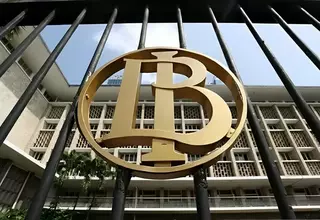
Bank Indonesia Says Higher Rates Are Attracting Foreign Capital Back
Foreign investor participation increased in SRBI instruments following the central bank's June 10 auction.
Economic Buffer Under Pressure as Middle Class Continues to Shrink
BI’s surprise rate hike and a 32% fuel price increase are squeezing Indonesia’s middle class, raising risks of economic decline.
Economist: BI’s Rate Hike Seeks to Prevent Confidence Crisis
Bank Indonesia's surprise rate hike underscores mounting rupiah pressure, but economists warn monetary policy alone is not enough.
Rate Hike, Fuel Price Surge Put Indonesia’s Middle Class Under Pressure
Indonesia's middle class faces mounting pressure as higher interest rates and fuel prices squeeze household budgetsThe Latest

Dear Mr. President, Don’t Skip ASEAN Summits
Despite calls for Prabowo to stay home, the Indonesian leader still needs to attend ASEAN summits.
PLN Rushes Coal Supplies After Power Outages Hit Java
PLN is rushing to secure coal supplies after shortages triggered rolling blackouts across Java, disrupting businesses and daily life.
Japan-Backed ADB Invests in Indonesia’s Human Capital
As many as 399 Indonesian awardees have joined the ADB-Japan Scholarship Program from 1988 to 2024.
Indonesian Stocks Rise Despite Foreign Outflows as MSCI Review Looms
Indonesia's JCI rose 2.8% as easing geopolitical tensions offset foreign outflows, MSCI concerns and rupiah pressures.
World Cup 2026: Paraguay Holds Off Turkey With 10 Men to Keep Knockout Hopes Alive
Matias Galarza scored after 65 seconds as 10-man Paraguay beat Turkey 1-0, eliminating the Turks and securing first place for the US.Most Popular