US Recognizes Opposition Candidate González As Winner of Venezuela's Presidential Election
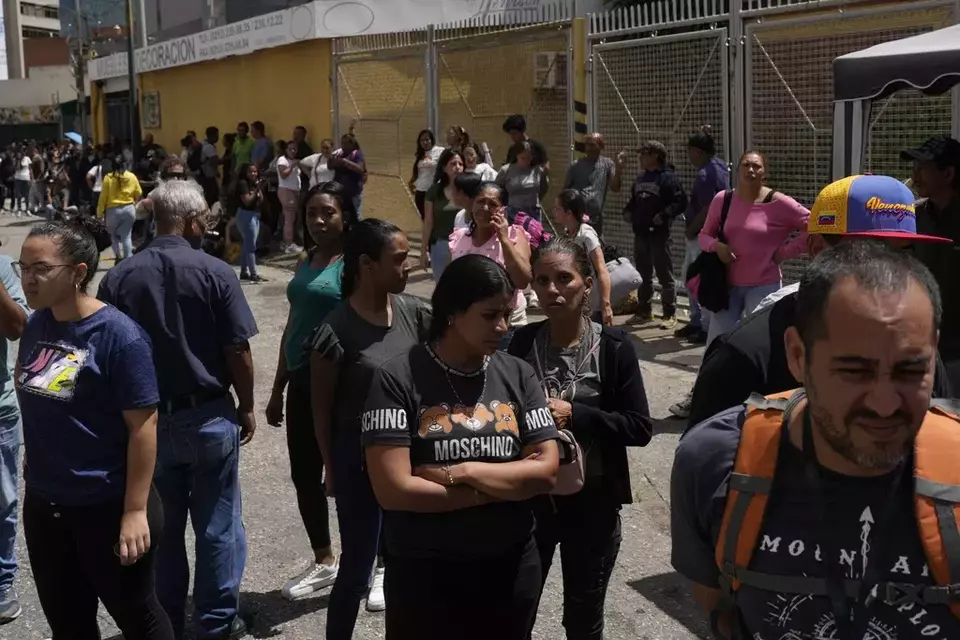
Caracas, Venezuela. The stakes grew higher for Venezuela's electoral authority to show proof backing its decision to declare President Nicolás Maduro the winner of the country's presidential election after the United States on Thursday recognized opposition candidate Edmundo González as the victor, discrediting the official results of the highly anticipated vote.
The US announcement followed calls from multiple governments, including close allies of Maduro, for Venezuela's National Electoral Council to release detailed vote counts, as it has done during previous elections.
The electoral body declared Maduro the winner Monday, but the main opposition coalition revealed hours later that it had evidence to the contrary in the form of more than two-thirds of the tally sheets that each electronic voting machine printed after polls closed.
“Given the overwhelming evidence, it is clear to the United States and, most importantly, to the Venezuelan people that Edmundo González Urrutia won the most votes in Venezuela’s July 28 presidential election,” US Secretary of State Antony Blinken said in a statement.
Maduro responded with a quick admonishment: "The United States needs to keep its nose out of Venezuela!”
The US government announcement came amid diplomatic efforts to persuade Maduro to release vote tallies from the election and increasing calls for an independent review of the results, according to officials from Brazil and México.
Government officials from Brazil, Colombia and Mexico have been in constant communication with Maduro's administration to convince him that he must show the vote tally sheets from Sunday's election and allow impartial verification, a Brazilian government official told The Associated Press Thursday.
The officials have told Venezuela's government that showing the data is the only way to dispel any doubt about the results, said the Brazilian official, who was not authorized to speak publicly about the diplomatic efforts and requested anonymity.
A Mexican official, who also spoke on condition of anonymity for the same reason, confirmed the three governments have been discussing the issue with Venezuela but did not provide details.
Earlier, Mexican President Andrés Manuel López Obrador said he planned to speak with President Luiz Inácio Lula da Silva of Brazil and President Gustavo Petro of Colombia, and that his government believes it is important that the electoral tallies be made public.
Later Thursday, the governments of Brazil, Colombia and Mexico issued a joint statement calling on Venezuela's electoral authorities “to move forward expeditiously and publicly release” detailed voting data, but they did not confirm any backroom diplomatic efforts to persuade Maduro's government to publish the vote tallies.
“The fundamental principle of popular sovereignty must be respected through impartial verification of the results,” they said in the statement.
On Monday, after the National Electoral Council declared Maduro the winner of the election, thousands of opposition supporters took to the streets. The government said it arrested hundreds of protesters and Venezuela-based human rights organization Foro Penal said 11 people were killed. Dozens more were arrested the following day, including a former opposition candidate, Freddy Superlano.
Opposition leader Maria Corina M Machado -- who was barred from running for president -- and González addressed a huge rally of their supporters in the capital, Caracas, on Tuesday, but they have not been seen in public since. Later that day, the president of the National Assembly, Jorge Rodriguez, called for their arrest, calling them criminals and fascists.
In an op-ed published Thursday in the Wall Street Journal, Machado said she is “hiding, fearing for my life, my freedom, and that of my fellow countrymen.” She reasserted that the opposition has physical evidence that Maduro lost the election and urged the international community to intervene.
“We have voted Mr. Maduro out,” she wrote. “Now it is up to the international community to decide whether to tolerate a demonstrably illegitimate government.”
Government repression over the years has pushed opposition leaders into exile. After the op-ed was published, Machado’s team told the AP that she was “sheltering.” Machado later posted a video on social media calling on supporters to gather Saturday across the country.
The González campaign had no comment on the op-ed.
On Wednesday, Maduro asked Venezuela’s highest court to conduct an audit of the election, but that request drew almost immediate criticism from foreign observers who said the court is too close to the government to produce an independent review.
Venezuela's Supreme Tribunal of Justice is closely aligned with Maduro's government. The court’s justices are nominated by federal officials and ratified by the National Assembly, which is dominated by Maduro sympathizers.
On Thursday, the court accepted Maduro's request for an audit and ordered him, González and the eight other candidates who participated in the presidential election to appear before the justices Friday.
González and Machado say they obtained more than two-thirds of the tally sheets printed from electronic voting machines after the polls closed. They said the release of the data on those tallies would prove Maduro lost.
Asked why electoral authorities have not released detailed vote counts, Maduro said the National Electoral Council has come under attack, including cyber-attacks, without elaborating.
The National Electoral Council, which is loyal to Maduro's United Socialist Party of Venezuela, has yet to release any results broken down by voting machine, as it did in past elections. It did, however, report that Maduro received 5.1 million votes, versus more than 4.4 million for González. But Machado, the opposition leader, has said vote tallies show González received roughly 6.2 million votes compared with 2.7 million for Maduro.
Venezuela has the world’s largest proven crude reserves and once boasted Latin America’s most advanced economy, but it entered into free fall after Maduro took the helm in 2013. Plummeting oil prices, widespread shortages and hyperinflation that soared past 130,000 percent led to social unrest and mass emigration.
More than 7.7 million Venezuelans have left the country since 2014, the largest exodus in Latin America’s recent history.
Tags: Keywords:Related Articles

New US Charge d’Affaires Arrives in Venezuela to Reopen Diplomatic Mission after 7 Years
Venezuela and the United States broke off diplomatic relations in February 2019 at the decision of Maduro.
Venezuela Moves to Open Oil Sector, Eyes Warmer Ties With US
Venezuela’s new leader is calling for foreign investment in the oil sector and improved relations with the US after Maduro’s removal.
Resource Nationalism Revisited: Why US Moves in Venezuela and Greenland Risk Backfiring
Economist and Nobel laureate Paul Krugman has argued that the appeal of Venezuela’s oil lies more in illusion than substance.
Trump Meets Oil Executives at White House to Pitch $100 Billion Venezuela Oil Investment
Trump met oil executives at the White House seeking $100 billion to revive Venezuela’s oil industry.
No Oil Shock, More Volatility: How US-Venezuela Tensions Affect Indonesia
Venezuela’s oil output has fallen to around 1 million barrels per day, accounting for less than 1% of global supply.
Venezuela Is Releasing a 'Significant Number' of Prisoners as Gesture to 'Seek Peace'
A human rights organization said that as of Dec. 29, 2025, there were 863 people detained in Venezuela “for political reasons."
Trump Says US to Receive Up to 50 Million Barrels of Venezuelan Oil
Trump says Venezuela will supply up to 50 million barrels of oil to the US as Washington presses Caracas to open its energy sector.
Cuba Releases Details of 32 Officers Killed in US Strike on Venezuela
Among the deceased are colonels, lieutenants, majors and captains, as well as some reserve soldiers, ranging in age from 26 to 60.
Denmark on Edge After US Capture of Venezuela’s Maduro
Prime Minister Mette Frederiksen says Washington’s rhetoric on Greenland threatens the foundations of the NATO alliance.
Venezuela Strike: Indonesian Businesses See Little Impact on Trade
Venezuela only makes up 0.02% of Indonesia's total exports, thereby reducing the conflict's impact on Jakarta's overall trade.The Latest

Dear Mr. President, Don’t Skip ASEAN Summits
Despite calls for Prabowo to stay home, the Indonesian leader still needs to attend ASEAN summits.
PLN Rushes Coal Supplies After Power Outages Hit Java
PLN is rushing to secure coal supplies after shortages triggered rolling blackouts across Java, disrupting businesses and daily life.
Japan-Backed ADB Invests in Indonesia’s Human Capital
As many as 399 Indonesian awardees have joined the ADB-Japan Scholarship Program from 1988 to 2024.
Indonesian Stocks Rise Despite Foreign Outflows as MSCI Review Looms
Indonesia's JCI rose 2.8% as easing geopolitical tensions offset foreign outflows, MSCI concerns and rupiah pressures.
World Cup 2026: Paraguay Holds Off Turkey With 10 Men to Keep Knockout Hopes Alive
Matias Galarza scored after 65 seconds as 10-man Paraguay beat Turkey 1-0, eliminating the Turks and securing first place for the US.Most Popular